Introduction
Have you ever received a text message containing four unexpected letters and wondered what the sender was trying to say? If you have seen DTTM in a private message, social media comment, or group chat, you might be curious about its meaning.
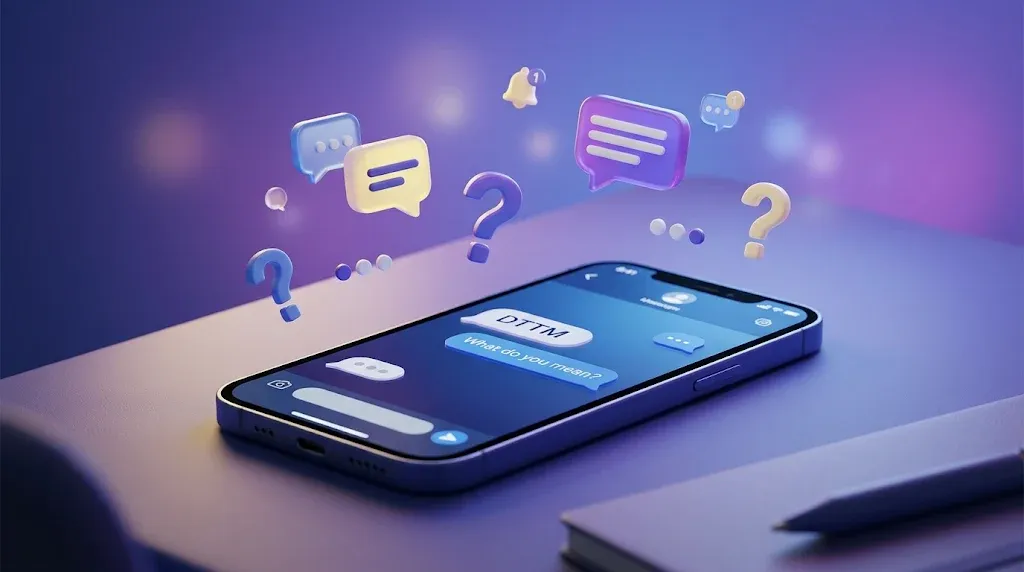
DTTM usually means “Don’t Talk to Me.” It is an informal texting abbreviation used when someone wants another person to stop talking, give them some space, or avoid discussing a particular subject.
However, the expression does not always communicate genuine anger. Friends sometimes use DTTM jokingly when they feel embarrassed, frustrated, or playfully annoyed by something another person says.
For example, someone might reply “DTTM 😭” after a friend shares an embarrassing photograph. In that situation, the sender may be joking rather than seriously asking the person to stop communicating.
Understanding the surrounding conversation is important because the same abbreviation can communicate different emotions. In this guide, we’ll explore the DTTM meaning in text, its full form, social media usage, examples, similar abbreviations, and appropriate ways to respond.
What Does DTTM Mean in Text?
DTTM means “Don’t Talk to Me” in informal texting and internet slang. People use it to express annoyance, frustration, embarrassment, or a desire to have some personal space.
Instead of typing the complete expression, someone can use these four letters to communicate their feelings quickly.
For example:
- “DTTM right now. I’m really tired.”
- “You showed everyone my picture? DTTM 😭”
- “I’m not ready to discuss this. DTTM.”
The intended meaning depends on the situation.
Sometimes, DTTM communicates a serious request to stop talking. In other situations, it is simply a dramatic or humorous reaction between friends.
Quick definition:
DTTM = Don’t Talk to Me.
It is generally suitable for informal conversations rather than professional communication.
DTTM Meaning at a Glance
| Detail | Explanation |
|---|---|
| Abbreviation | DTTM |
| Full form | Don’t Talk to Me |
| Category | Texting slang |
| Main purpose | Asking someone to stop talking |
| Tone | Serious, annoyed, or playful |
| Common setting | Text messages and online chats |
| Formality | Informal |
| Similar expressions | DND, DTM, TTYL |
What Does DTTM Stand For?
DTTM stands for Don’t Talk to Me.
Each letter represents the first letter of one word in the complete expression.
| Letter | Word |
|---|---|
| D | Don’t |
| T | Talk |
| T | To |
| M | Me |
Together, the letters form a short expression that communicates a desire to stop a conversation.
For example, imagine that somebody repeatedly asks you questions while you are busy studying. You might respond:
“DTTM right now. I’ll message you later.”
This tells the other person that you do not want to continue talking at that particular moment.
What Does DTTM Mean in Texting and Slang?
In texting slang, DTTM is generally associated with avoiding a conversation or expressing that you do not want someone to continue talking.
However, its emotional meaning can change depending on the relationship and situation.
Here are five common ways someone might use it.
1. Annoyance
Someone may use DTTM when another person is irritating them or repeatedly asking unwanted questions.
Example: “DTTM, you’ve asked me the same thing five times.”
2. Frustration
It can communicate irritation after something disappointing or unpleasant happens.
Example: “I failed the test again. DTTM today.”
3. Personal space
Sometimes, people simply need time alone and do not feel ready to continue a conversation.
Example: “DTTM for a little while. I need some rest.”
4. Embarrassment
Friends may use DTTM dramatically after an embarrassing incident.
Example: “You posted that old picture? DTTM 😭”
5. Playful teasing
In friendly conversations, it can be a funny reaction to someone’s joke or unexpected statement.
Example:
Friend: “Remember when you fell in front of everyone?”
You: “DTTM bro 😂”
In this example, the sender is probably expressing playful embarrassment rather than genuine anger.

How Is DTTM Used in Everyday Conversations?
DTTM usually appears in short messages, direct replies, and informal online conversations.
People may use it in situations such as:
- When someone keeps sending unwanted messages.
- When a friend makes an embarrassing joke.
- When someone wants to avoid an uncomfortable topic.
- When a person feels emotionally overwhelmed.
- When someone wants to express frustration without writing a long explanation.
The Surrounding Words, emojis, and relationship between the people help determine its intended tone.
For example:
Situation 1: Someone is annoyed
Person A: “Why do you keep asking me?”
Person B: “DTTM. I’m not in the mood.”
Situation 2: A funny reaction
Person A: “You slept through the entire movie!”
Person B: “DTTM 😂”
Situation 3: Someone needs space
Person A: “Can we discuss what happened yesterday?”
Person B: “Not right now. I need some time.”
These examples demonstrate why context matters when interpreting informal abbreviations.
DTTM Meaning on Snapchat, Instagram, TikTok, and WhatsApp
DTTM generally carries the same intended meaning across social media platforms: Don’t Talk to Me.
The way someone uses it may differ depending on the conversation.
DTTM Meaning on Snapchat
On Snapchat, DTTM may appear in direct messages, snaps, or conversations between friends.
Someone might use it after receiving an embarrassing picture or an annoying message.
Example:
Friend: “I saved your funniest snap!”
You: “DTTM 😭”
Here, the abbreviation is probably a playful reaction.
DTTM Meaning on Instagram
On Instagram, people may use DTTM in direct messages, comments, or story replies.
Example:
Friend: “I posted that picture you told me not to share.”
You: “DTTM 😂”
The sender is expressing a humorous reaction to something embarrassing.
DTTM Meaning on TikTok
On TikTok, DTTM may appear in comments or messages when someone reacts to a funny, frustrating, or embarrassing situation.
Example:
Person 1: “This video reminds me of your last dance.”
Person 2: “DTTM 💀”
The second person is probably jokingly asking the other person to stop bringing it up.
DTTM Meaning on WhatsApp
On WhatsApp, DTTM can appear in private chats and group conversations.
Example:
Friend: “I’m going to keep asking until you tell me.”
You: “DTTM for a while. I’ll explain later.”
In this situation, the sender wants some time before continuing the discussion.
These are illustrative examples of how the abbreviation could be used, not evidence that every platform has a separate official definition.
Is DTTM Rude or Just a Joke?
DTTM can sound rude because its literal meaning directly asks another person not to talk.
However, it is not always intended to offend someone. Its tone depends on the sender’s emotions, relationship, and surrounding conversation.
| Situation | Possible interpretation |
|---|---|
| After an argument | Serious or frustrated |
| With laughing emojis | Playful or sarcastic |
| During an uncomfortable discussion | Wants personal space |
| Between close friends | Teasing or joking |
| After repeated unwanted messages | Setting a boundary |
Consider these examples:
Serious usage:
“DTTM. I need some time alone.”
This sounds like a genuine request for space.
Playful usage:
“DTTM 😂 You really did that?”
This sounds more like a humorous reaction.
Helpful tip: If someone sends DTTM without emojis or additional context, do not automatically assume they are joking. Respect their message and give them space if necessary.

- Related To Another Article: https://blessnesty.com/wrd-meaning-in-text/
Examples of DTTM in Text Messages
Understanding texting abbreviations becomes easier when you see them in realistic conversations.
Here are eight examples showing how people might use DTTM in everyday situations.
Example 1: When someone is annoyed
Friend 1: “Why are you disturbing me?”
Friend 2: “DTTM right now.”
Meaning: The person does not want to continue talking.
Example 2: When someone is embarrassed
Friend 1: “I found your old childhood pictures.”
Friend 2: “DTTM 😭”
Meaning: The person is jokingly expressing embarrassment.
Example 3: When someone needs space
Person A: “Can we discuss this now?”
Person B: “DTTM for a bit. I’m tired.”
Meaning: The person needs some time alone.
Example 4: When friends are teasing
Friend 1: “You lost the game again!”
Friend 2: “DTTM 😂”
Meaning: The person is reacting humorously.
Example 5: After an argument
Person A: “Why are you still angry?”
Person B: “DTTM. I don’t want to argue.”
Meaning: The person wants to end the conversation.
Example 6: When someone is overwhelmed
Friend 1: “Are you coming to the party?”
Friend 2: “DTTM rn. Too much going on.”
Meaning: The person is overwhelmed and does not feel like talking.
Example 7: When someone makes a joke
Friend 1: “Everyone knows your secret now!”
Friend 2: “DTTM bro 💀”
Meaning: The person is reacting dramatically, possibly in a joking way.
Example 8: When someone is busy
Friend 1: “Can you talk right now?”
Friend 2: “DTTM until I finish studying. I’ll text you later.”
Meaning: The person does not want to be interrupted.
How to Respond When Someone Sends DTTM
If someone sends you DTTM, your response should depend on the situation and how serious the conversation seems.
You do not need to argue or send multiple messages. A calm response is usually better.
Here are some possible replies:
| Your reply | When to use it |
|---|---|
| “Okay, I’ll give you space.” | When someone is upset |
| “No problem, talk later.” | When they are busy |
| “Haha, what did I do?” | When they are joking |
| “Are you serious?” | When you are unsure |
| “Sorry if I upset you.” | When you may have hurt them |
| “Alright, take your time.” | When they need a break |
| “I’ll wait until you’re ready.” | When they want to talk later |
| “Can you explain what happened?” | When clarification is needed |
Example conversation:
Friend: “DTTM right now.”
You: “Okay, I’ll give you some space. Message me whenever you’re ready.”
This response shows that you respect the other person’s feelings without making the situation worse.
Other Possible Meanings of DTTM
Although “Don’t Talk to Me” is the main interpretation in informal slang references, the same letters can have different meanings in specialized contexts.
Here are the interpretations worth knowing:
| Possible meaning | Context |
|---|---|
| Don’t Talk to Me | Informal texting and slang |
| Don’t Text the Mobile | Alternative expansion listed by some slang references |
| Date-Time | Technical and software contexts |
| Date Timestamp | Database and data-modeling terminology |
The technical interpretation is supported by Microsoft’s documentation, which describes a DTTM structure for storing date and time information. Texas Health and Human Services also uses DTTM for Date Timestamp in its data-modeling guidelines. Microsoft Learn+2
Remember: If you receive DTTM in a casual Conversation, consider “Don’t Talk to Me” first. If you encounter it in a technical document, database, or software specification, the date-and-time interpretation may be more appropriate.
What Does DTTM Mean in Technical or Database Terms?
Outside texting and internet slang, DTTM can refer to a date-and-time value.
In software development, database management, and data modeling, abbreviations like DTTM are sometimes used to identify fields containing date and time information.
For example, a database might contain field names such as:
created_dttmupdated_dttmevent_dttm
These names may indicate when a record was created, updated, or when an event occurred.
Microsoft’s Office file-format documentation describes a DTTM structure that stores information such as minutes, hours, day, month, year, and weekday.
Similarly, Texas Health and Human Services defines DTTM as Date Timestamp, describing a combination of date and time used to capture a particular point in time. Microsoft Learn+1
This technical meaning is different from the informal expression used in everyday text messages.
DTTM vs. DTM: What’s the Difference?
DTTM and DTM look similar, but they should not automatically be treated as interchangeable.
And DTTM is commonly interpreted in informal slang references as “Don’t Talk to Me.” DTM has several possible interpretations depending on the conversation and community.
Here is a simple comparison:
| Abbreviation | Possible meaning | Purpose |
|---|---|---|
| DTTM | Don’t Talk to Me | Asking someone to stop talking |
| DTM | Don’t Text Me | Asking someone not to send messages |
| TTM | Talk to Me | Inviting someone to communicate |
| IDC | I Don’t Care | Expressing indifference |
| GTG | Got to Go | Ending a conversation |
| BRB | Be Right Back | Temporarily leaving |
| TTYL | Talk to You Later | Saying goodbye temporarily |
| DND | Do Not Disturb | Requesting uninterrupted time |
These expressions communicate different things.
For example, DTTM expresses that someone does not want to talk, while BRB suggests that the person will return shortly.
The exact meaning of DTM should also be interpreted through context rather than assuming it always means “Don’t Text Me.”
Similar Texting Abbreviations to Know
If you are learning internet slang, understanding related abbreviations can make online conversations easier.
Here are some common texting expressions:
- IDC: I Don’t Care.
- IDK: I Don’t Know.
- NVM: Never Mind.
- SMH: Shaking My Head.
- BRB: Be Right Back.
- BTW: By the Way.
- LOL: Laughing Out Loud.
- TBH: To Be Honest.
- GTG: Got to Go.
- TTYL: Talk to You Later.
- DND: Do Not Disturb.
- TTM: Talk to Me.
For example, someone might write:
“IDC, I’m going offline. TTYL!”
This means they do not care about the current discussion and will talk later.
Learning these expressions can help you understand text messages, social media comments, and everyday online conversations.
When Should You Use DTTM?
You can use DTTM in informal conversations when you want to communicate that you do not feel like talking.
However, consider how the other person might understand your message.
Appropriate situations:
- When joking with close friends.
- When reacting to an embarrassing situation.
- When you need some personal space.
- When you want to stop an uncomfortable conversation.
- When you are playfully expressing frustration.
Situations where you should avoid it:
- Professional emails.
- Formal conversations.
- Serious discussions where a clear explanation is necessary.
- Conversations where the other person may misunderstand your tone.
If you genuinely need some space, a clearer message such as “I need some time alone. I’ll talk to you later” may communicate your feelings more respectfully.
People Also Ask
DTTM usually means “Don’t Talk to Me.” It is an informal abbreviation used when someone does not want to continue talking, feels annoyed, or needs some personal space.
The full form of DTTM is “Don’t Talk to Me.” Each letter represents the first letter of a word in the expression.
In slang, DTTM generally means “Don’t Talk to Me.” It can express annoyance, frustration, embarrassment, or a playful reaction depending on the conversation.
On Snapchat, DTTM generally has the same informal interpretation: “Don’t Talk to Me.” Friends may use it in snaps or direct messages when joking, feeling annoyed, or wanting some space.
It can sound rude because it directly asks someone not to talk. However, close friends may use it jokingly. The tone depends on the situation, relationship, and surrounding messages.
Conclusion
Understanding the DTTM Meaning In Text is simple once you know its main informal interpretation. DTTM usually stands for “Don’t Talk to Me,” an abbreviation people may use when they feel annoyed, need personal space, or want to react dramatically to something.
Although it can sound serious, friends sometimes use it jokingly in everyday conversations. Its exact tone depends on the situation, the relationship between the people, and the surrounding messages.
If someone sends you DTTM, consider the context before responding. When they genuinely need space, respect their feelings and give them time.
Now that you know what DTTM means, you can understand this abbreviation more confidently in text messages and online conversations.