Introduction
Home should be the safest place in the world. Yet every year, families experience preventable accidents caused by overlooked hazards such as fires, falls, electrical faults, poisoning, water damage, and home security breaches.
Many homeowners focus on comfort and appearance while unintentionally ignoring hidden risks that can threaten loved ones and property. A single missing smoke detector, faulty electrical outlet, or weak entry point can lead to devastating consequences.
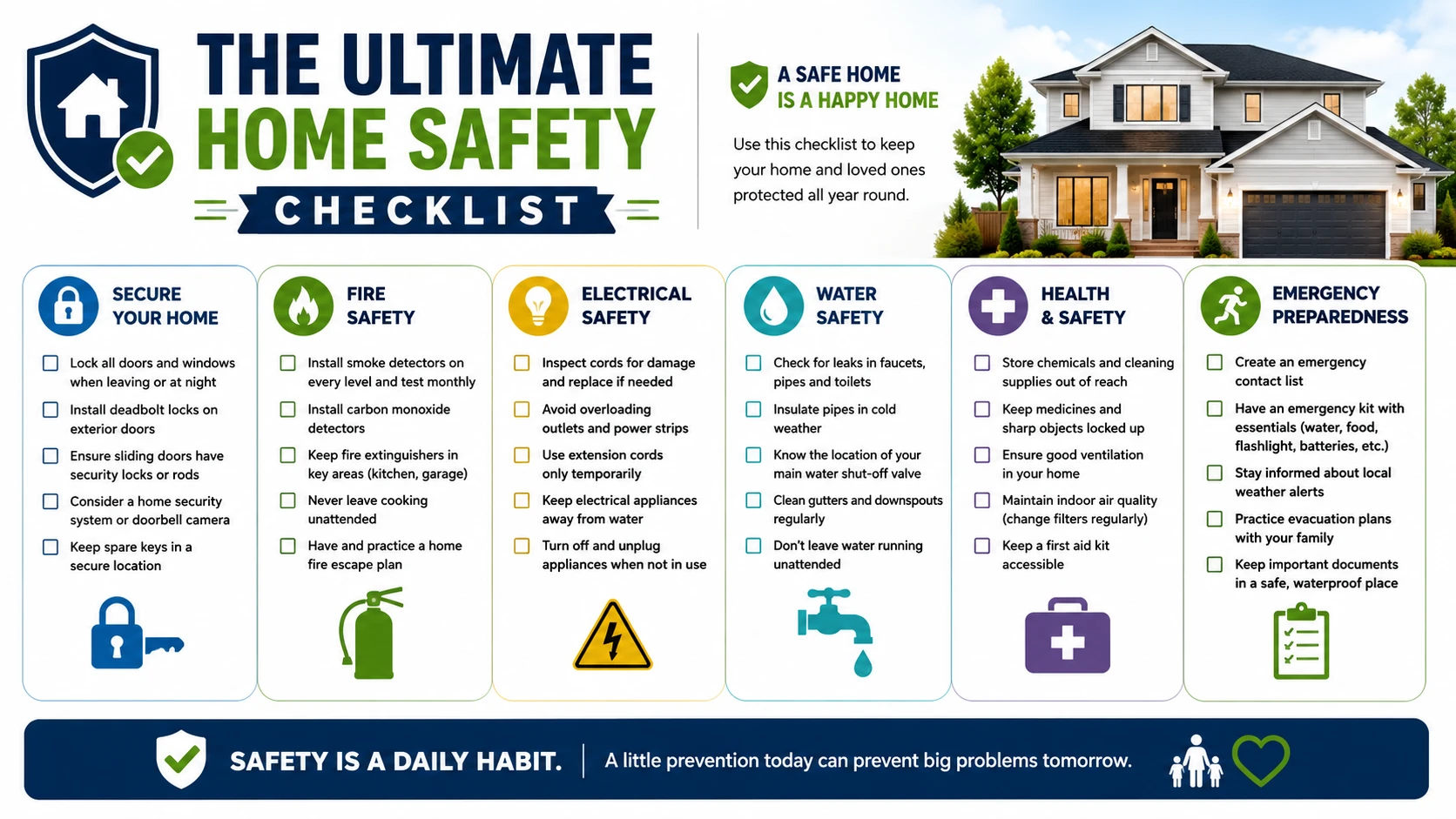
This comprehensive Ultimate Home Safety Checklist provides a room-by-room and system-by-system approach to identifying hazards, improving security, preventing accidents, and preparing for emergencies. Whether you’re a homeowner, renter, parent, caregiver, or property manager, this guide will help you create a safer, healthier, and more secure living environment.
Why Home Safety Matters More Than Ever

Modern homes contain more technology, appliances, and connected devices than ever before. While these Innovations improve convenience, they also introduce new risks.
Common household dangers include:
- Fire hazards
- Electrical failures
- Carbon monoxide exposure
- Slip-and-fall accidents
- Burglary
- Water damage
- Poisoning
- Severe weather emergencies
A proactive safety plan reduces risk and increases peace of mind.
What Is a Home Safety Checklist?
A home safety checklist is a structured inspection framework designed to identify and eliminate hazards throughout a property.
Benefits include:
- Preventing injuries
- Improving family safety
- Protecting property
- Enhancing security
- Reducing repair expenses
- Improving emergency preparedness
Think of it as preventive maintenance for your family’s wellbeing.
How to Perform a Complete Home Safety Audit
Before starting repairs or upgrades:
Walk Through Every Room
Inspect:
- Floors
- Walls
- Ceilings
- Electrical outlets
- Doors
- Windows
Evaluate Safety Equipment
Check:
- Smoke alarms
- Carbon monoxide detectors
- Fire extinguishers
- Security systems
Step 3: Identify High-Risk Areas
Focus on:
- Kitchens
- Bathrooms
- Staircases
- Garages
- Basements
Prioritize Hazards
Address immediately:
- Fire risks
- Electrical faults
- Structural damage
- Security vulnerabilities
Exterior Home Safety Checklist
Driveways and Walkways
Check for:
- Cracks
- Uneven pavement
- Poor drainage
- Slippery surfaces
- Obstructions
Best Practices
- Repair damaged surfaces
- Improve drainage systems
- Install anti-slip treatments
Outdoor Lighting
Good lighting reduces accidents and deters criminals.
Inspect:
- Entryways
- Side paths
- Backyards
- Driveways
Recommended upgrades:
- Motion-sensor lights
- LED floodlights
- Smart outdoor lighting
Doors and Locks
Verify:
- Deadbolts function properly
- Strike plates are reinforced
- Door frames are secure
- Smart locks are updated
Windows and Security
Inspect:
- Window locks
- Glass condition
- Emergency escape access
Consider:
- Security film
- Window sensors
- Reinforced glass’
Garage Safety
Review:
- Automatic reverse mechanisms
- Storage systems
- Tool security
- Chemical storage
Store:
- Paint
- Fuel
- Pesticides
- Cleaning products safely
Swimming Pool Safety
If applicable:
- Install fencing
- Use self-closing gates
- Keep rescue equipment nearby
- Use pool covers
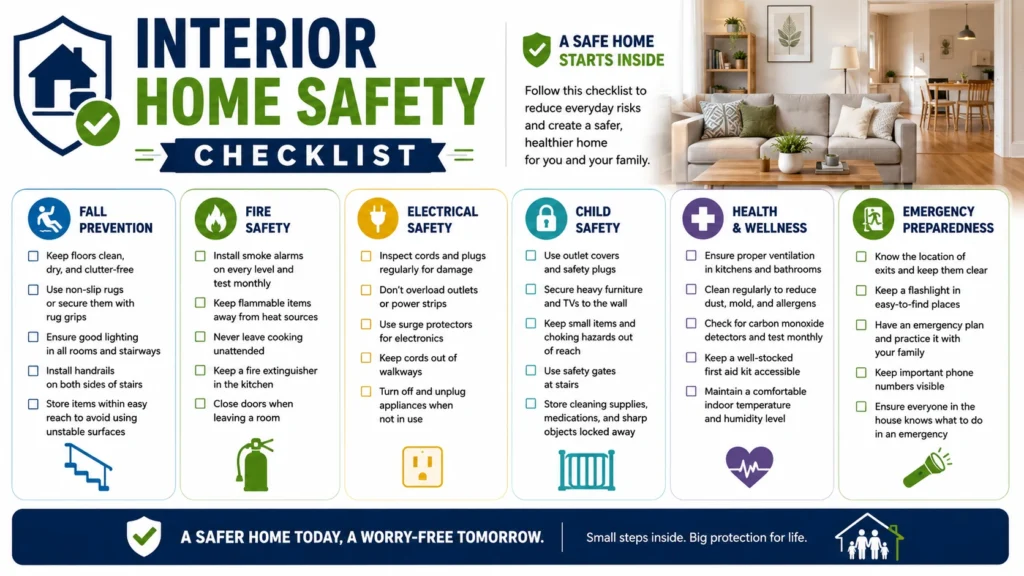
Interior Home Safety Checklist
Living Room Safety
Evaluate:
- Furniture stability
- Loose rugs
- Electrical cords
- TV mounting systems
Tips:
- Anchor heavy Furniture
- Secure televisions
- Remove trip hazards
Kitchen Safety
The kitchen is one of the highest-risk areas.
Checklist:
- Fire extinguisher available
- Appliances functioning properly
- Knives stored safely
- Cabinets secured
Avoid:
- Overloaded outlets
- Unattended cooking
- Damaged cords
Bathroom Safety
Prevent falls by:
- Installing grab bars
- Using non-slip mats
- Improving lighting
Also:
- Set safe water temperatures
- Secure medications
Bedroom Safety
Inspect:
- Smoke alarms nearby
- Escape routes
- Electrical connections
Keep:
- Flashlights
- Emergency contacts
- Phone chargers accessible
Stairway Safety
Ensure:
- Handrails are secure
- Steps are level
- Lighting is adequate
Remove:
- Clutter
- Loose rugs
- Extension cords
Basement Safety
Check for:
- Moisture
- Mold
- Structural cracks
- Electrical issues
Install:
- Sump pumps
- Moisture alarms
Fire Safety Checklist
Smoke Alarms
Install alarms:
- On every floor
- Outside bedrooms
- Inside sleeping areas
Maintenance:
- Test monthly
- Replace batteries annually
Carbon Monoxide Detectors
Place detectors:
- Near sleeping areas
- Near fuel-burning appliances
Test regularly.
Fire Extinguishers
Keep extinguishers in:
- Kitchen
- Garage
- Workshop
- Utility room
Learn PASS:
- Pull
- Aim
- Squeeze
- Sweep
Family Escape Planning
Every household should:
- Identify two exits per room
- Establish meeting points
- Conduct drills twice yearly
Electrical Safety Checklist
Inspect:
- Frayed wires
- Damaged outlets
- Overloaded circuits
Best practices:
- Use surge protectors
- Test GFCI outlets
- Avoid daisy-chaining extension cords
- Hire licensed electricians when necessary
Childproofing Your Home
Children face unique risks.
Checklist:
- Safety gates installed
- Outlet covers used
- Furniture anchored
- Medicines locked away
- Cleaning products secured
- Window guards installed
Senior Citizen Home Safety Checklist
Older adults face elevated risks from falls.
Recommended improvements:
- Better lighting
- Grab bars
- Non-slip flooring
- Handrails
- Emergency alert systems
Home Security Checklist
Smart Locks
Benefits:
- Remote access
- Temporary guest codes
- Activity logs
Security Cameras
Install cameras at:
- Front doors
- Back entrances
- Driveways
Alarm Systems
Include:
- Motion detection
- Window sensors
- Mobile alerts
Package Theft Prevention
Protect deliveries with:
- Video doorbells
- Lockboxes
- Secure pickup locations
Smart Home Cybersecurity
Protect connected devices by:
- Using strong passwords
- Enabling two-factor authentication
- Updating firmware
- Securing Wi-Fi networks
Emergency Preparedness Checklist
Emergency Contacts
Maintain a list including:
- Family members
- Doctors
- Emergency services
- Utility providers
Emergency Supply Kit
Include:
| Item | Recommended Supply |
| Water | 3-day minimum |
| Food | 3-day minimum |
| Flashlights | 1 per person |
| Batteries | Extra supply |
| First Aid Kit | Fully stocked |
| Radio | Battery-powered |
| Medications | Emergency Reserve |
Disaster Planning
Prepare for:
- Floods
- Earthquakes
- Storms
- Wildfires
- Power outages
Seasonal Home Safety Checklist
Spring
- Inspect roof
- Clean gutters
- Check drainage
Summer
- Inspect cooling systems
- Review pool safety
- Prepare for storms
Fall
- Service heating equipment
- Test alarms
- Clean chimneys
Winter
- Prevent frozen pipes
- Check insulation
- Stock emergency supplies
Monthly Home Safety Maintenance Schedule
Every Month:
Test smoke alarms
Test carbon monoxide detectors
Check locks
Inspect fire extinguishers
Review emergency supplies
Examine electrical cords
Check walkways
Top Home Safety Mistakes to Avoid
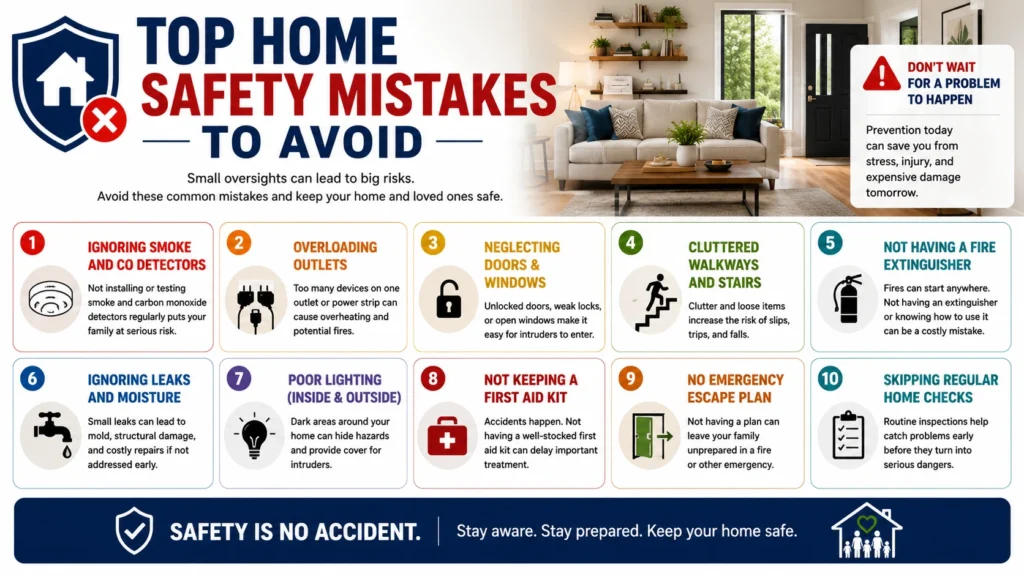
Many Accidents occur because people:
- Ignore alarm maintenance
- Overload outlets
- Leave exits blocked
- Skip safety inspections
- Store chemicals improperly
- Delay repairs
- Fail to create emergency plans
Avoiding these mistakes significantly improves household safety.
People Also Ask
A; A complete inspection should be performed at least twice per year, with quick monthly checks for alarms, extinguishers, locks, and emergency supplies.
A; Smoke alarms and carbon monoxide detectors consistently rank among the most effective life-saving devices in residential properties.
A; Start with quality locks, outdoor lighting, visible security signage, and video doorbells before investing in more advanced systems.
A; The kitchen often carries the highest risk due to cooking fires, sharp tools, hot surfaces, and electrical appliances.
A; Yes. While landlords maintain certain systems, renters remain responsible for many daily safety practices and emergency preparedness measures.
Conclusion
Creating a safe home is not a one-time project—it is an ongoing commitment. By following this Ultimate Home Safety Checklist, you can dramatically reduce risks, prevent accidents, strengthen security, and improve emergency readiness.
Start with the highest-risk hazards, create a monthly inspection routine, and involve every family member in safety planning. Small improvements today can prevent major problems tomorrow.
A safer home isn’t just about protecting a building—it’s about protecting the people who matter most