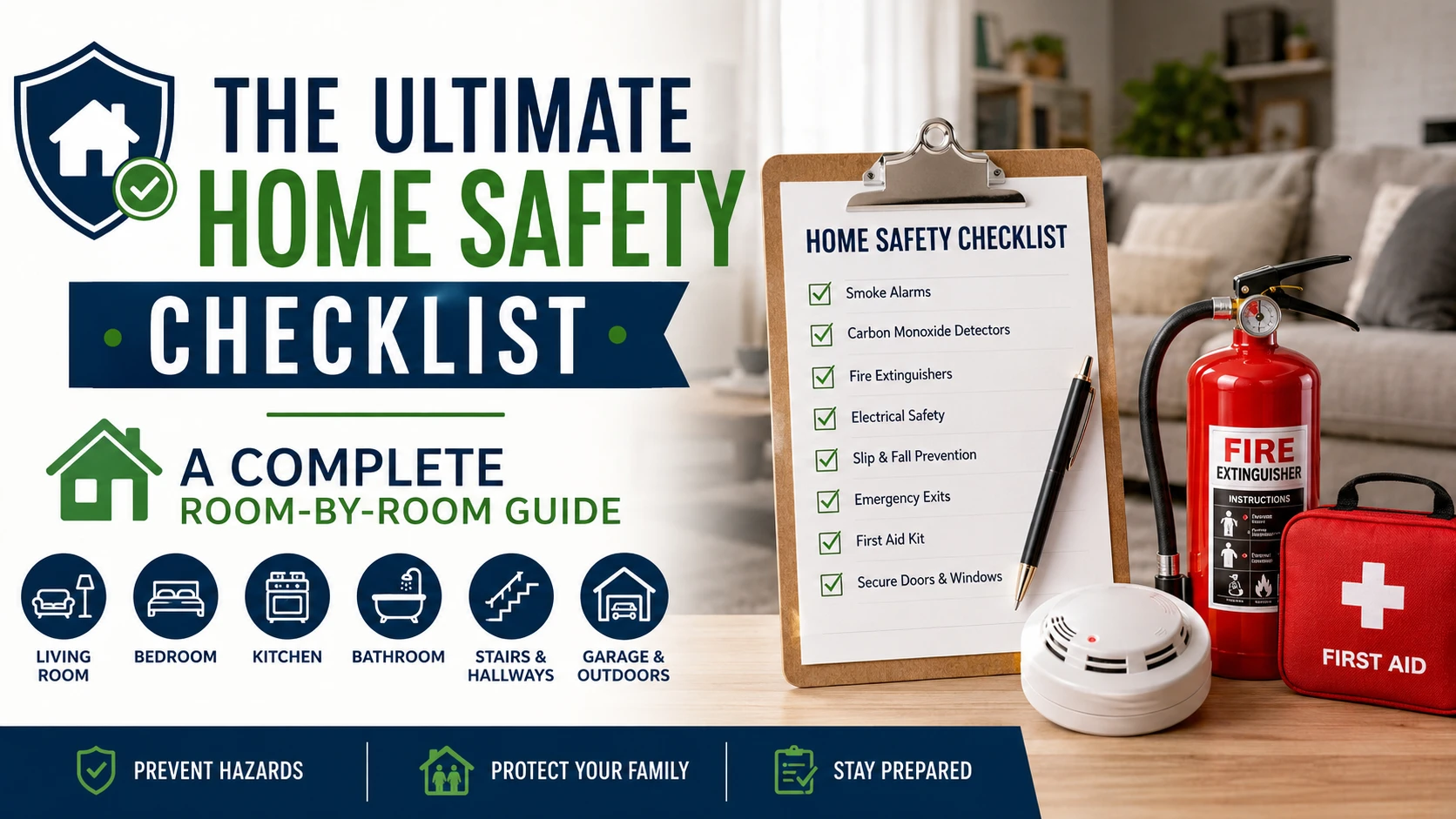
The Ultimate Home Safety Checklist. The good news is that improving home safety does not always require expensive equipment or major renovations.
Use this guide as a home safety inspection checklist for a house, apartment, rental property, or family home. Work through each section, identify problems, and prioritize the hazards that require immediate attention.
Quick 15-Minute Home Safety Audit
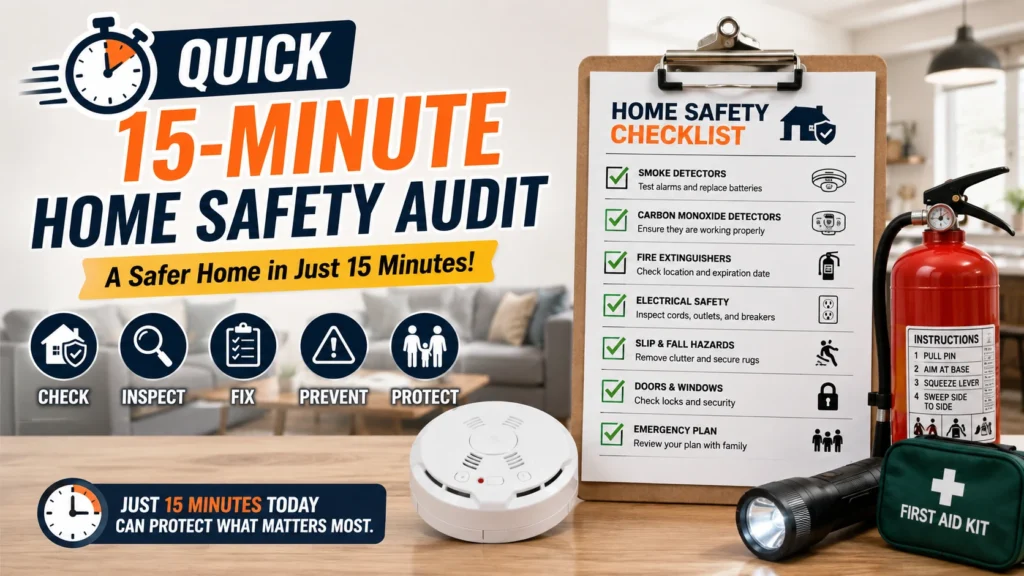
- Test smoke alarms. Essential
- Check carbon monoxide alarms.
- Make sure emergency exits are accessible.
- Remove obvious trip hazards.
- Inspect visible electrical cords and outlets.
- Check that fire extinguishers are accessible.
- Secure unstable furniture.
- Lock away medications and dangerous chemicals.
- Check bathroom floors for slip hazards.
- Make sure exterior doors and windows work properly.
- Check that hallways and stairs are clear.
- Confirm children cannot access dangerous items.
- Check exterior lighting.
- Review emergency contacts.
- Make sure everyone knows the basic emergency plan.
Fire Safety Checklist
Smoke Alarm Checklist
- Smoke alarms are installed on every level.
- Smoke alarms are inside bedrooms.
- Smoke alarms are outside sleeping areas.
- Everyone knows what the alarm sounds like.
- Appropriate alerting solutions are available for household members who may not hear conventional alarms.
Fire Escape Plan
- Each household member knows the primary escape route.
- Doors and windows needed for escape open properly.
- Hallways and exits remain uncluttered.
- Older adults and people with disabilities have an assistance plan.
- Everyone understands that they should stay outside after escaping.
Carbon Monoxide Safety Checklist
Never ignore a carbon monoxide alarm. Follow the alarm manufacturer’s instructions and local emergency guidance.
Electrical Safety Checklist
Cords and Outlets
- Electrical cords are free from fraying and visible damage.
- Plugs fit outlets properly.
- There are no signs of scorching or overheating.
- Cords do not cross major walking paths.
- Outdoor electrical equipment is suitable for outdoor use.
Kitchen Safety Checklist
- Children cannot easily access dangerous appliances.
- Smoke alarms are functioning.
- An appropriate fire extinguisher is accessible.
Bathroom Safety Checklist
Floors and Shower Areas
- Shower and tub surfaces provide adequate traction.
- Bathroom lighting is sufficient.
- Night lighting is available.
Bedroom Safety Checklist
Bedrooms should provide clear movement paths and accessible emergency exits.
- Walkways around beds are clear.
- Rugs do not create trip hazards.
- Lamps and switches are easy to reach.
- A flashlight is accessible.
- Smoke alarms are working.
- CO alarms are working where appropriate.
- Furniture is stable.
- Mobility aids are safely accessible.
Living Room Safety Checklist
The living room often contains heavy furniture, electronics, rugs, cords, fireplaces, and items that children can reach.
- Furniture is stable.
- Walkways are clear.
- Rugs do not slide or curl.
- Windows and doors function properly.
- Children cannot easily reach dangerous objects.
Childproofing Checklist
Children explore their surroundings differently from adults. They climb, pull, reach, open cabinets, and investigate objects that may appear harmless.
- Sharp objects are inaccessible.
- Water hazards have appropriate barriers and supervision.
Home Safety Checklist for Seniors
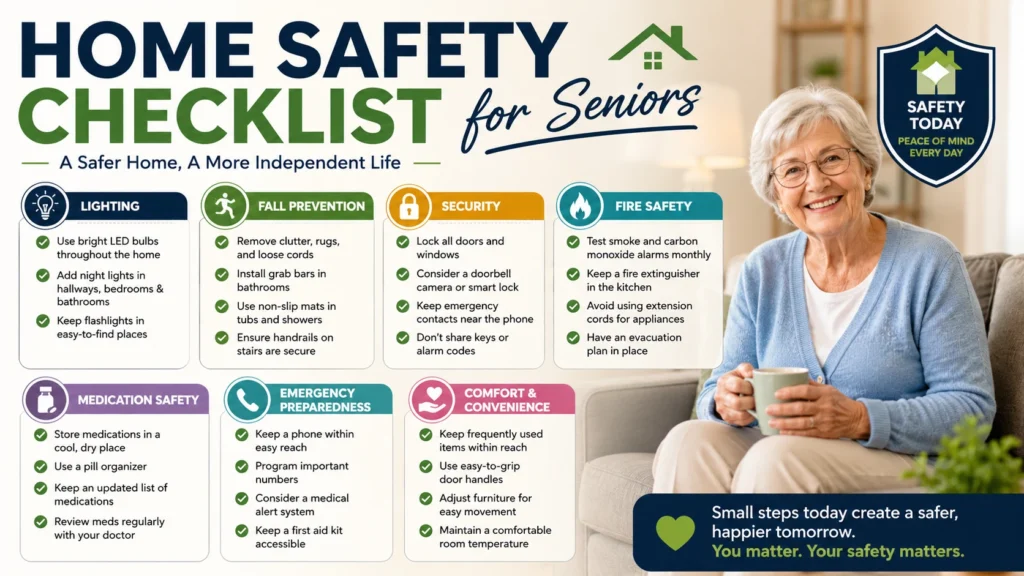
For older adults, home safety should focus on fall prevention, accessibility, lighting, and easy access to emergency Assistance.
- Floors and walkways are free of clutter.
- Stairs have secure handrails.
- Bathroom surfaces provide adequate traction.
- Frequently used items are easy to reach.
- Emergency contacts are accessible.
- Bedroom lighting is sufficient.
- Night lights are available where useful.
- Furniture does not obstruct walking paths.
The objective is not simply to make the home look safer. It is to make everyday activities easier and reduce preventable hazards.
Home Security Checklist
Doors
- Exterior doors close and lock properly.
- Door frames and hardware are in good condition.
- Sliding doors have appropriate security measures.
- Appropriate visibility measures are available where needed.
Windows
- Ground-level windows close and lock properly.
- Emergency escape windows remain accessible.
- Security measures do not prevent emergency escape.
Exterior Security
- Vegetation does not create unnecessary hiding places.
- House numbers are visible.
Stairway and Hallway Safety Checklist
Stairs can turn a small obstruction into a serious fall hazard.
- Handrails are secure.
- Steps are in good condition.
- Walking surfaces are not excessively slippery.
- Hallways remain clear.
- Night lighting is available where needed.
- Rugs and runners are secure.
- Doorways are easy to navigate.
- People with mobility limitations can move safely through the area.
Garage and Workshop Safety Checklist
Garages commonly contain chemicals, tools, vehicles, fuel, ladders, and heavy equipment.
- Sharp equipment is inaccessible to children.
- Walkways are clear.
- Garage doors operate correctly.
- Electrical equipment is suitable for the environment.
- Emergency access remains possible.
Outdoor Home Safety Checklist
- Walkways are free of major trip hazards.
- Steps are stable.
- Handrails are secure.
- Outdoor lighting works.
- House numbers are visible.
- Pools and water areas have suitable safety barriers.
Emergency Preparedness Checklist
Emergency Supplies
- First-aid supplies are available.
- Flashlights are available.
- Spare batteries are available.
- Emergency contact information is accessible.
Home Maintenance Safety Checklist
Preventive maintenance is an essential part of home safety.
Monthly
- Test smoke alarms.
- Check fire extinguishers.
- Inspect visible electrical cords.
- Check locks and exterior lighting.
- Look for leaks.
- Remove clutter from exits.
- Review emergency supplies.
Seasonally
- Inspect heating and cooling equipment.
- Check exterior walkways.
- Review weather-related hazards.
- Inspect windows and doors.
- Check drainage areas.
- Review seasonal emergency plans.
- Repair damaged safety equipment.
Annually
- Review alarm replacement dates.
- Review fire escape plans.
- Inspect major home systems as recommended.
- Review important household documents.
- Update emergency contacts.
- Reassess child safety as children grow.
- Reassess accessibility needs.
Home Safety Checklist for Renters
- Test permitted smoke and CO alarms.
- Report damaged outlets.
- Report leaks promptly.
- Report broken locks.
- Keep exits clear.
- Avoid unauthorized electrical modifications.
- Secure furniture where appropriate.
- Use permitted child-safety solutions.
- Keep emergency contacts accessible.
- Understand building emergency procedures.
- Know the nearest emergency exits.
- Document serious maintenance issues.
Do not make structural or electrical modifications that violate your lease or local requirements.
The Most Common Home Safety Mistakes
Even careful homeowners can overlook simple hazards.
Treating Safety as a One-Time Project
A home changes constantly. Children grow, furniture moves, appliances age, and household needs change.
Blocking Emergency Exits
Storage should never take priority over an accessible escape route.
Forgetting Household-Specific Risks
A home with toddlers requires different precautions from a home occupied by older adults, pets, or someone with mobility limitations.
How to Prioritize Home Safety Improvements
You do not need to fix everything at once.
Immediate danger
Address hazards that could cause serious injury or prevent emergency escape. Examples include non-functioning alarms, blocked exits, damaged electrical equipment, and serious structural problems.
A Better Way to Perform a Home Safety Inspection
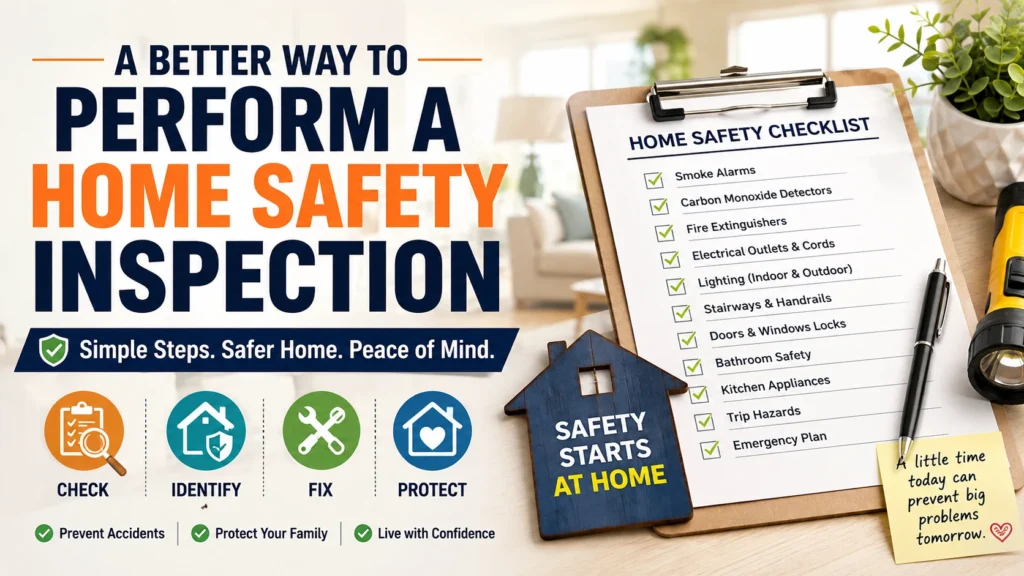
Instead of start outside. Inspect entrances, walkways, lighting, garage areas, gates, and exterior hazards.
What could cause an injury here?
Look for fall, burn, cut, poisoning, choking, electrical, and other hazards.
What could prevent us from escaping?
Look for blocked doors, inaccessible windows, cluttered hallways, and other obstacles.
Who is most vulnerable to this hazard?
Consider children, older adults, guests, pets, and anyone with mobility or accessibility needs.
FAQs
What should be on a home safety checklist?
A complete home safety checklist should cover fire and carbon monoxide protection, electrical safety, kitchen and bathroom hazards, stairs, fall prevention, child safety, senior safety, home security, outdoor areas, emergency preparedness, and preventive maintenance.
How can I make my home safer without spending much money?
Begin with basic housekeeping and maintenance. Clear exits, remove clutter, secure loose rugs, test alarms, improve lighting where necessary, organize emergency supplies, and address obvious damaged equipment.
Conclusion
A safer home begins with paying attention to the everyday hazards that are easy to overlook. From working smoke and carbon Monoxide alarms to clear hallways, secure furniture, safe electrical equipment, slip-resistant bathrooms, and accessible emergency exits, small improvements can make a meaningful difference.
Prioritize immediate hazards first, maintain essential safety equipment, and keep your emergency plan familiar to everyone in the household. A few minutes of prevention today can help protect your family, your home, and your peace of mind tomorrow.