Introduction
A Top Quality Dog Leashes For Every Adventure every dog owner will ever purchase. Whether you’re strolling through city streets, exploring mountain trails, jogging before sunrise, or heading out on a weekend camping trip, the right leash helps keep your dog safe, comfortable, and under control.
Unfortunately, not all leashes are created equal.
Many dog owners choose a leash based solely on appearance or price, only to discover later that it frays quickly, causes discomfort, or lacks the strength needed for active adventures.
This guide explores everything you need to know about choosing top quality dog leashes for every adventure, including leash types, materials, safety considerations, dog-size recommendations, maintenance tips, and expert buying advice.
Why Choosing the Right Dog Leash Matters
A leash is more than a simple connection between you and your dog.
A high-quality leash helps:
- Prevent escapes
- Improve training success
- Increase walking comfort
- Reduce pulling-related injuries
- Enhance outdoor safety
- Improve control during emergencies
The wrong leash can lead to broken hardware, hand injuries, or dangerous situations in busy environments.
What Makes a Dog Leash High Quality?
Durability
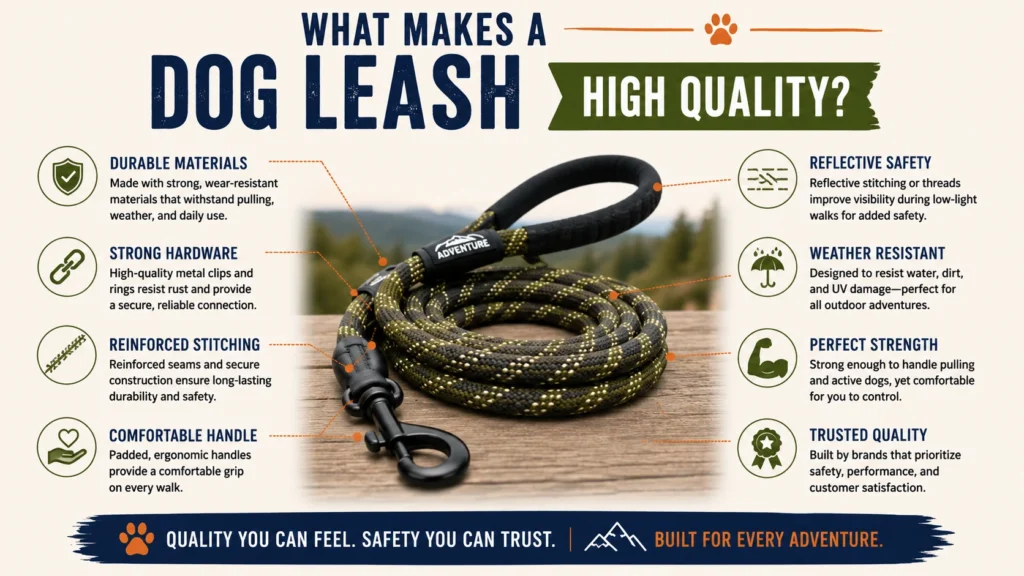
Quality Leashes withstand daily wear, moisture, friction, and pulling forces without weakening.
Look for:
- Reinforced stitching
- Heavy-duty webbing
- Climbing-grade rope
- Premium leather
- Strong hardware
Comfort
Comfort affects both dogs and handlers.
Features include:
- Padded handles
- Soft-touch materials
- Lightweight construction
- Ergonomic grips
Safety Features
Top-quality leashes often include:
- Reflective stitching
- Traffic handles
- Secure locking clips
- High-visibility colors
Weather Resistance
Outdoor adventures demand weather-resistant materials.
Ideal options include:
- Biothane
- PVC-coated webbing
- Waterproof rope systems
Hardware Strength
Weak clips often fail before the leash itself.
Look for:
- Aircraft-grade aluminum
- Stainless steel
- Rust-resistant hardware
- Locking carabiners
Types of Dog Leashes Explained
Standard Leashes
The most common option.
Best for:
- Daily walks
- Basic obedience
- Urban environments
Typical length:
- 4–6 feet
Training Leashes
Designed to assist obedience training.
Useful for:
- Recall training
- Behavior correction
- Puppy education
Typical length:
- 10–30 feet
Hands-Free Leashes
Attach around the waist.
Ideal for:
- Running
- Hiking
- Jogging
Benefits:
- Improved mobility
- Reduced hand fatigue
Retractable Leashes
Allow variable length.
Pros:
- Increased freedom
Cons:
- Reduced control
- Potential safety risks
- Not ideal for training
Long-Line Leashes
Excellent for:
- Recall practice
- Open fields
- Adventure dogs
Length range:
- 15–50 feet
Traffic Leashes
Very short leashes designed for close control.
Ideal for:
- Crowded areas
- Urban environments
- Reactive dogs
Best Dog Leashes for Different Adventures
| Activity | Recommended Leash Type | Ideal Length |
| City Walks | Standard Leash | 6 ft |
| Hiking | Rope or Hands-Free | 6–8 ft |
| Running | Hands-Free | 4–6 ft |
| Camping | Long-Line | 20–50 ft |
| Beach Trips | Waterproof Biothane | 10–20 ft |
| Road Trips | Safety Travel Leash | 4–6 ft |
Urban Walks: What Works Best?
City environments require maximum control.
Recommended features:
- Reflective trim
- Traffic handle
- Strong clip
- Comfortable grip
Avoid:
- Extremely long leashes
- Poor visibility designs
Trail Hiking Leashes
Hiking creates unique demands.
Look for:
- Climbing rope construction
- Waterproof materials
- Durable carabiners
- Shock absorption
Trail dogs benefit from equipment built for rough terrain and unpredictable weather.
Running and Jogging Leashes
Runners need freedom and stability.
Best features:
- Waist attachment
- Bungee section
- Reflective stitching
- Lightweight construction
Hands-free systems reduce strain while improving movement.
Camping Adventures
Camping often combines freedom with safety.
A long-line leash provides:
- Controlled exploration
- Secure tethering
- Recall practice opportunities
Waterproof materials are especially beneficial around campsites.
Beach Trips and Water Adventures
Saltwater, sand, and moisture destroy many traditional leashes.
Best options include:
- Biothane
- PVC-coated webbing
- Waterproof rope systems
Benefits:
- Easy cleaning
- No odor retention
- Quick drying
Travel and Road Trips
Travel leashes should focus on:
- Compact storage
- Easy attachment
- Secure control
A backup leash is always recommended during long trips.
Dog Leash Materials Compared
Nylon Leashes
Advantages:
- Affordable
- Lightweight
- Widely available
Disadvantages:
- Can absorb odors
- Less durable over time
Leather Leashes
Advantages:
- Exceptional comfort
- Long lifespan
- Classic appearance
Disadvantages:
- Requires maintenance
- Higher cost
Biothane Leashes
Advantages:
- Waterproof
- Odor resistant
- Extremely durable
Disadvantages:
- Slightly more expensive
Climbing Rope Leashes
Advantages:
- Exceptional strength
- Great for outdoor adventures
- Comfortable handling
Disadvantages:
- Slightly heavier
PVC-Coated Leashes
Advantages:
- Weatherproof
- Easy cleaning
- Ideal for muddy conditions
Disadvantages:
- Less traditional feel
How to Choose the Right Leash for Your Dog
Small Dogs
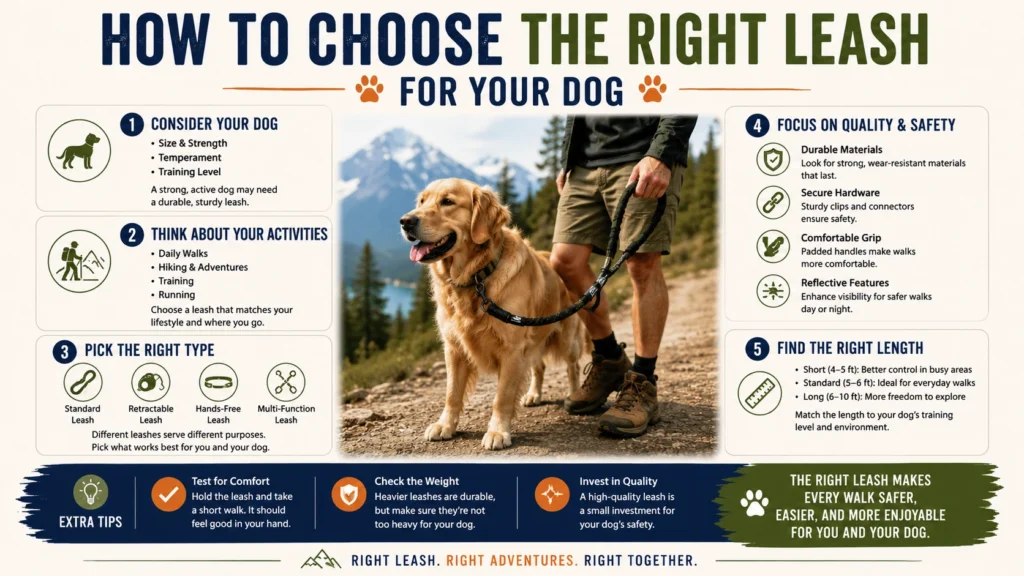
- Lightweight materials
- Smaller hardware
- Narrow leash widths
Avoid heavy clips that may cause discomfort.
Medium Dogs
Most leash styles work well.
Focus on:
- Durability
- Comfort
- Activity compatibility
Large Dogs
Require:
- Reinforced construction
- Heavy-duty hardware
- Strong materials
Large breeds place significant stress on leash systems.
Strong Pullers
Choose:
- Climbing rope
- Heavy-duty nylon
- Locking clips
Combine with proper training for best results.
Puppies
Puppies need:
- Lightweight designs
- Soft materials
- Easy handling
Training leashes become valuable as recall develops.
Best Leash Length for Different Activities
4 Feet
Best for:
- Busy cities
- Close control
6 Feet
Best all-around option.
Suitable for:
- Daily walks
- Basic training
10–15 Feet
Useful for:
- Parks
- Training sessions
20–50 Feet
Ideal for:
- Recall practice
- Outdoor adventures
Common Dog Leash Mistakes Owners Make
Many leash problems stem from poor equipment choices.
Common mistakes include:
- Choosing style over durability
- Using retractable leashes in crowded areas
- Ignoring hardware quality
- Using overly long leashes in urban settings
- Failing to inspect worn equipment
Leash Safety Tips Every Dog Owner Should Know
Safety should always come first.
Important tips:
- Inspect clips regularly
- Replace frayed leashes immediately
- Use reflective gear at night
- Keep proper leash length in traffic
- Train reliable leash manners
Even premium leashes require routine safety checks.
How to Maintain a Dog Leash for Long-Term Use
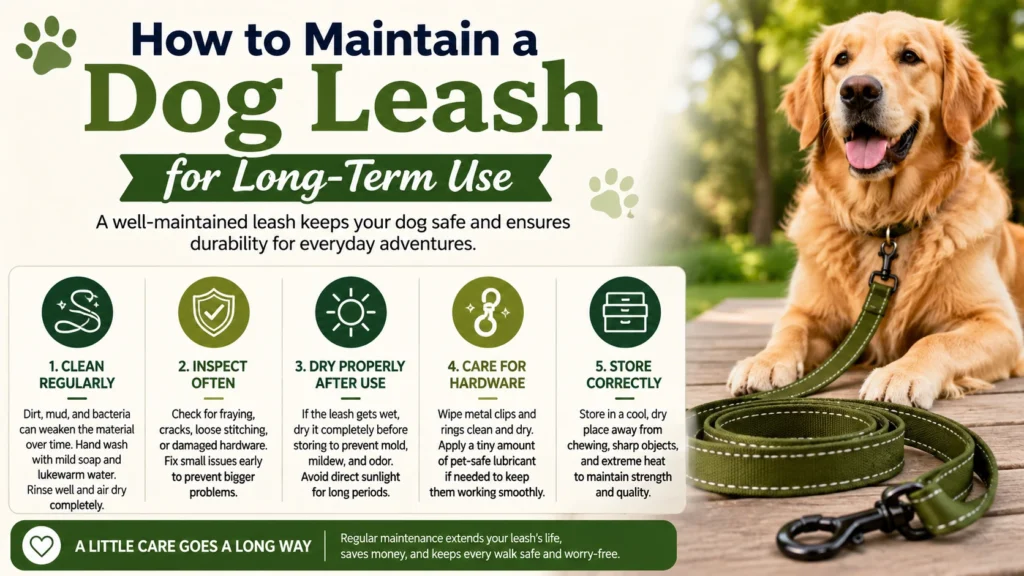
Proper care Extends lifespan significantly.
Weekly Inspection
Check:
- Stitching
- Hardware
- Fraying
- Wear points
Cleaning
Different materials require different care.
Nylon:
- Mild soap
- Air dry
Leather:
- Leather conditioner
Biothane:
- Wipe clean with water
Storage
Store:
- Dry
- Clean
- Away from direct sunlight
People Also Ask
A; Climbing rope, premium leather, and Biothane are generally considered among the most durable options.
A; They can be useful in certain environments but often provide less control than traditional leashes.
A; Heavy-duty rope leashes combined with proper training are usually effective.
A; Replace immediately if significant wear, fraying, cracking, or hardware damage appears.
A; For most dog owners, a 6-foot leash offers the ideal balance of freedom and control.
Conclusion
Choosing the right dog leash is one of the simplest yet most important decisions a dog owner can make. The best leash isn’t Necessarily the most expensive—it’s the one that matches your dog’s size, behavior, and lifestyle while delivering the durability, comfort, and safety needed for everyday adventures.
Whether you’re walking through city streets, hiking remote trails, training a new puppy, or camping under the stars, investing in a high-quality leash can improve every outing.
Use this guide as your foundation for finding the perfect leash, and you’ll enjoy safer, more comfortable adventures with your dog for years to come.