Introduction
Weekly Planning Tips Blessings—it is a new opportunity to grow, achieve meaningful goals, and embrace life’s blessings with gratitude. Yet many people begin their weeks feeling overwhelmed, unprepared, or uncertain about what lies ahead.
That is why combining weekly planning tips and blessings can be so powerful. Planning helps organize your priorities, while blessings, prayers, and positive affirmations strengthen your mindset and bring peace to your heart. Together, they create a balanced approach to success that nurtures both productivity and well-being.
Whether you want to improve your weekly routine, reduce stress, strengthen your faith, or simply start each week with a positive outlook, this guide will help you do all of that in one place.
Inside, you’ll discover practical planning strategies, uplifting blessings, encouraging prayers, motivational quotes, and weekly reflection practices designed to help you create a productive, peaceful, and purpose-filled week.
Why Weekly Planning Matters More Than Daily Planning
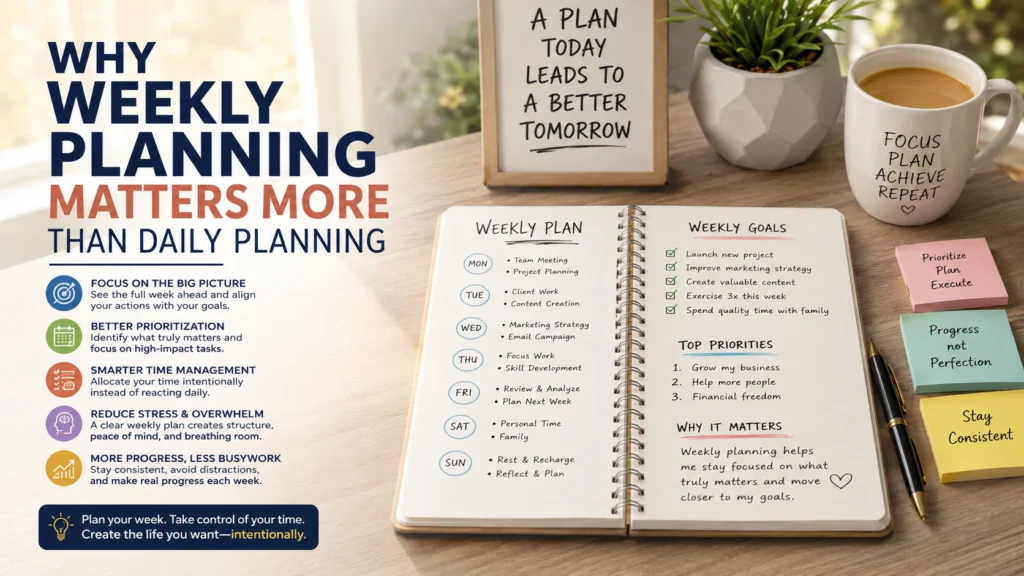
Daily planning focuses on Immediate tasks, but weekly planning gives you a bigger picture. It helps you align your actions with your goals, manage your time wisely, and avoid constantly reacting to unexpected situations.
Benefits of Weekly Planning
- Provides clarity and direction.
- Reduces decision fatigue.
- Improves productivity.
- Creates better work-life balance.
- Helps prioritize important goals.
- Reduces stress and overwhelm.
- Encourages consistency.
- Supports personal growth.
- Makes time for self-care.
- Strengthens accountability.
How Planning Reduces Stress
When everything remains in your head, anxiety grows. Writing down priorities, appointments, and goals creates mental space and reduces uncertainty. A clear plan allows you to approach the week with confidence instead of chaos.
How Weekly Planning Improves Productivity
Weekly planning helps identify the most important tasks before the week begins. Rather than constantly switching priorities, you focus on meaningful progress and make better use of your energy.
How to Create an Effective Weekly Planning Routine
Review the Previous Week
Reflect on accomplishments, unfinished tasks, and lessons learned.
Set Your Top Priorities
Choose three to five major goals that deserve your attention.
Schedule Important Tasks
Place key activities directly into your calendar.
Plan Self-Care Activities
Schedule rest, exercise, family time, and personal reflection.
Leave Room for Flexibility
Avoid overloading every hour. Unexpected opportunities and challenges will arise.
Weekly Blessings for a Fresh Start
Every week deserves a hopeful beginning. These blessings can help you start with faith, positivity, and confidence.
15 Happy New Week Blessings
- May this week bring peace to your heart and clarity to your mind.
- May every step you take lead you closer to your goals.
- May new opportunities find their way into your life.
- May your efforts be rewarded with success and joy.
- May your home be filled with love and laughter this week.
- May strength guide you through every challenge.
- May gratitude fill your heart each morning.
- May your work be meaningful and productive.
- May kindness surround you wherever you go.
- May you discover unexpected blessings every day.
- May your relationships grow stronger this week.
- May hope shine brighter than your worries.
- May your plans align with your purpose.
- May peace accompany you throughout the week.
- May this week become one of your most rewarding yet.
15 Weekly Planning Tips for Success
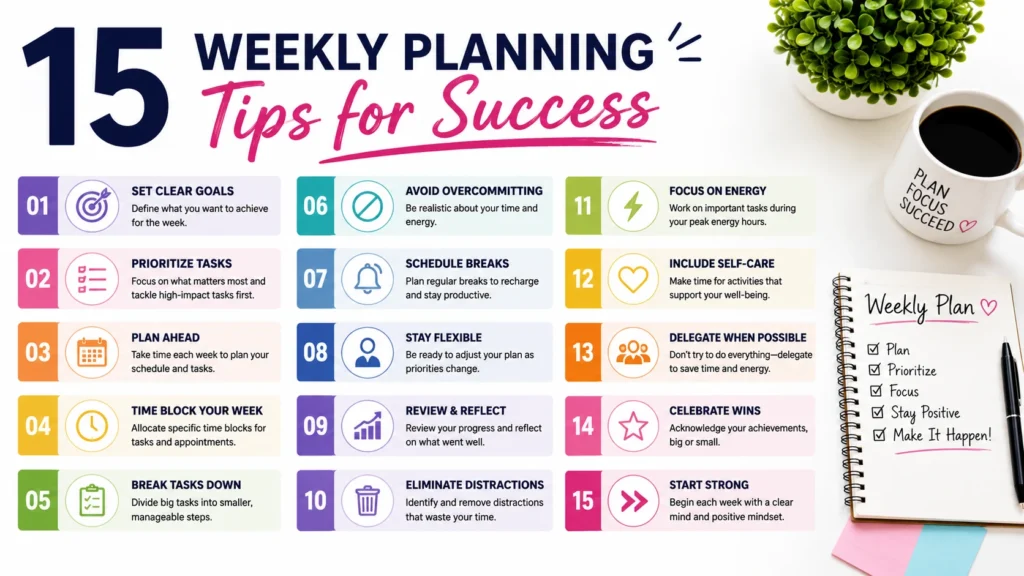
1. Start With Clear Goals
Define what success looks like before Planning tasks.
2. Use Time Blocking
Assign specific time periods for important work.
3. Focus on Three Priorities
Identify the most important outcomes for the week.
4. Plan Your Mornings
A strong morning often leads to a productive day.
5. Schedule Breaks
Rest improves focus and performance.
6. Batch Similar Tasks
Group related work together.
7. Review Your Calendar Weekly
Stay aware of commitments and deadlines.
8. Protect Deep Work Time
Limit distractions during important projects.
9. Prepare Meals Ahead
Reduce decision fatigue during busy days.
10. Schedule Exercise
Support physical and mental well-being.
11. Create Buffer Time
Allow flexibility between appointments.
12. Limit Multitasking
Focus on one important task at a time.
13. Review Progress Midweek
Make adjustments before problems grow.
14. Celebrate Small Wins
Recognize consistent progress.
15. End With Reflection
Learn from each week and improve continuously.
Weekly Planning vs Daily Planning
| Feature | Weekly Planning | Daily Planning |
| Focus | Long-term priorities | Immediate tasks |
| Flexibility | High | Moderate |
| Goal Alignment | Strong | Limited |
| Stress Reduction | Excellent | Good |
| Strategic Thinking | High | Low |
| Productivity Impact | Long-term | Short-term |
How to Use These Blessings
- Share them every Monday morning.
- Include one in your planner.
- Use them in prayer journals.
- Send them to friends and family.
- Post them on social media.
- Add them to gratitude practices.
- Read one before starting work.
How to Write Your Own Heartfelt Blessings
- Start with gratitude.
- Focus on encouragement.
- Keep the message sincere.
- Use positive language.
- Speak from the heart.
- Personalize the blessing.
- End with hope and peace.
Best Situations to Share Blessings
- Monday mornings
- Weekly planning sessions
- Family gatherings
- Team meetings
- Church groups
- Personal journals
- Social media posts
- Difficult life transitions
Common Mistakes to Avoid While Writing Blessings
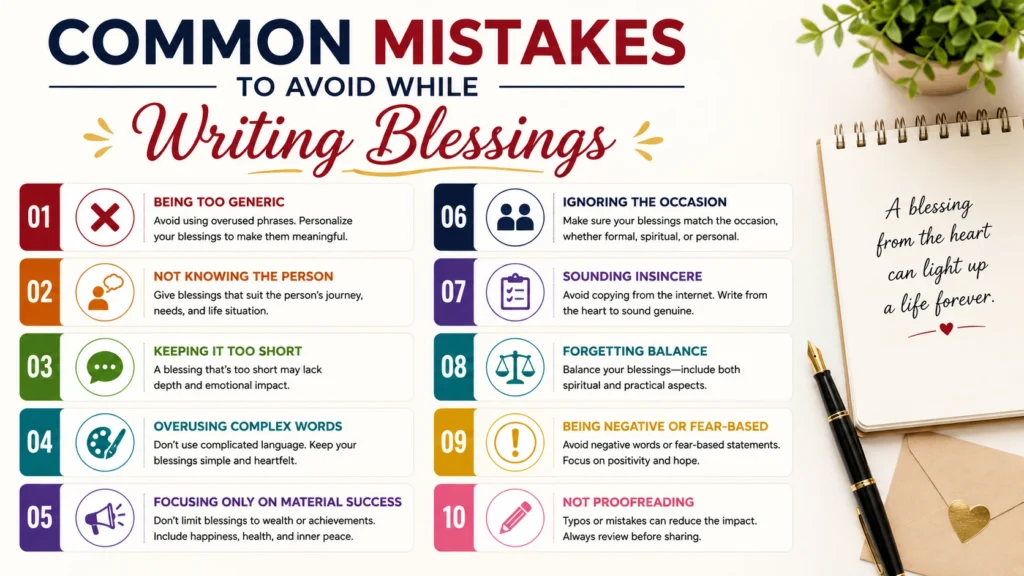
- Being overly generic.
- Using negative language.
- Making blessings too long.
- Sounding forced or insincere.
- Focusing only on material success.
- Ignoring gratitude.
- Forgetting encouragement.
People Also Ask
A; Yes. Positive blessings encourage gratitude, optimism, and emotional resilience, helping you approach challenges with a healthier perspective.
A; Many people find Sunday evening or Monday morning ideal because it creates clarity before the week becomes busy.
A; Absolutely. Productivity without rest often leads to burnout. Scheduling self-care is essential for long-term success.
A; Three to five meaningful priorities usually provide enough focus without creating overwhelm.
A; Yes. Many people use prayer, gratitude, blessings, and reflection alongside practical planning tools to create a more balanced and fulfilling week.
Conclusion
A productive week is not only built through schedules, calendars, and task lists. It is also shaped by your mindset, gratitude, faith, and willingness to embrace life’s blessings.
When you combine Intentional planning with uplifting blessings, you create a foundation for both achievement and inner peace. As you move into each new week, may your goals be clear, your heart be grateful, and your path be filled with purpose.
If you enjoyed these weekly planning tips and blessings, explore more inspiring content on BlessNesty to discover prayers, affirmations, gratitude messages, and uplifting blessings for every season of life.