Introduction
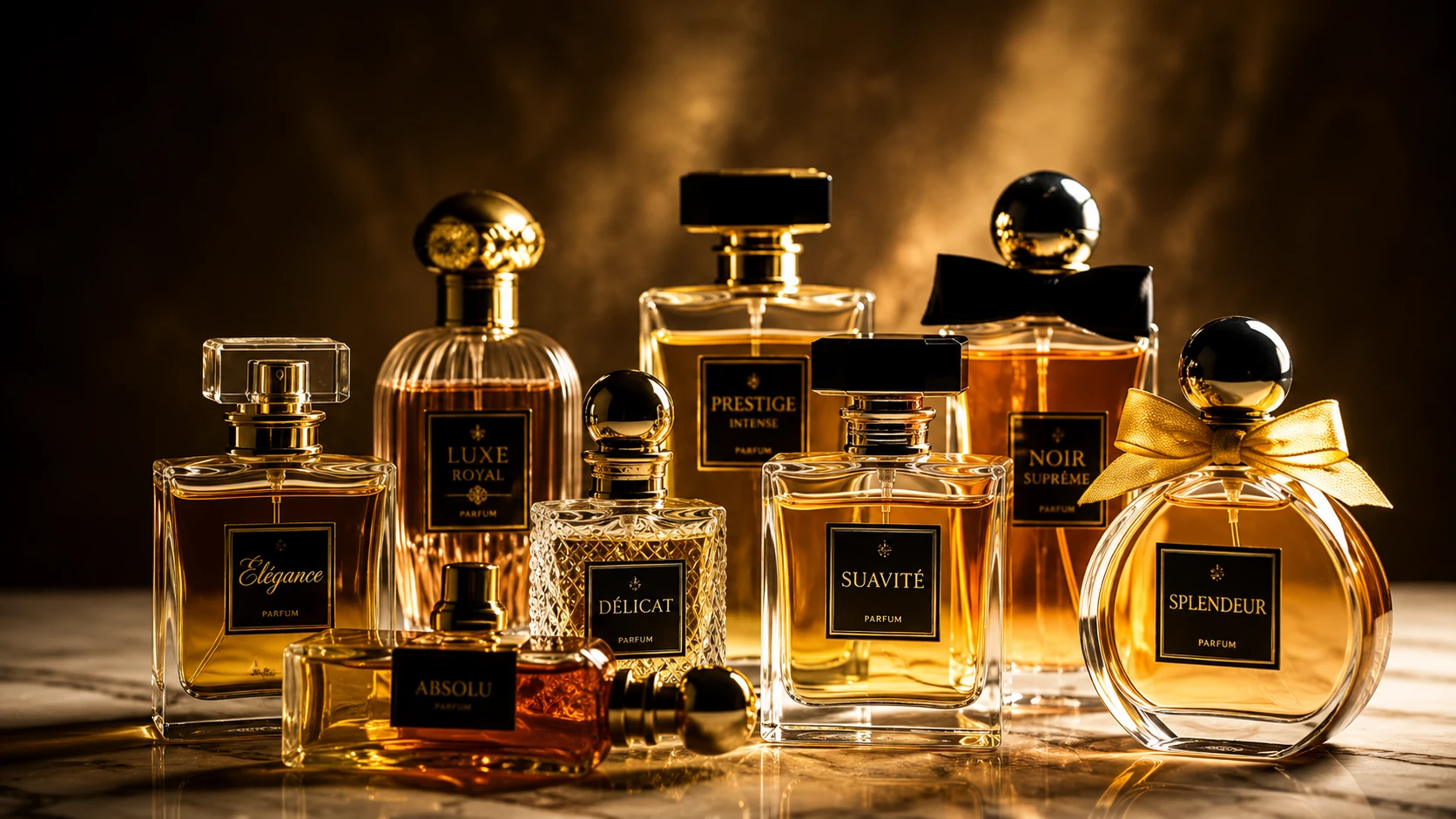
The Ultimate Guide To Luxury Fragrances. They represent artistry, craftsmanship, history, science, and personal expression combined into one unforgettable experience. A truly exceptional fragrance can become part of your identity, create lasting memories, and communicate your personality without saying a single word.
In today’s premium fragrance market, consumers have access to everything from iconic designer perfumes to exclusive niche creations crafted from some of the world’s rarest ingredients. Yet choosing the right fragrance can feel overwhelming. Understanding fragrance families, concentration levels, ingredient quality, longevity, and scent evolution helps transform fragrance buying from guesswork into a rewarding journey.
This ultimate guide explores every aspect of luxury fragrances—from their fascinating history and scientific foundations to the world’s most valuable ingredients, top luxury brands, fragrance layering techniques, and expert buying advice. Whether you’re searching for your signature scent, building a fragrance collection, or simply expanding your fragrance knowledge, this comprehensive resource will help you navigate the world of premium perfumes with confidence.
The History of Luxury Fragrances
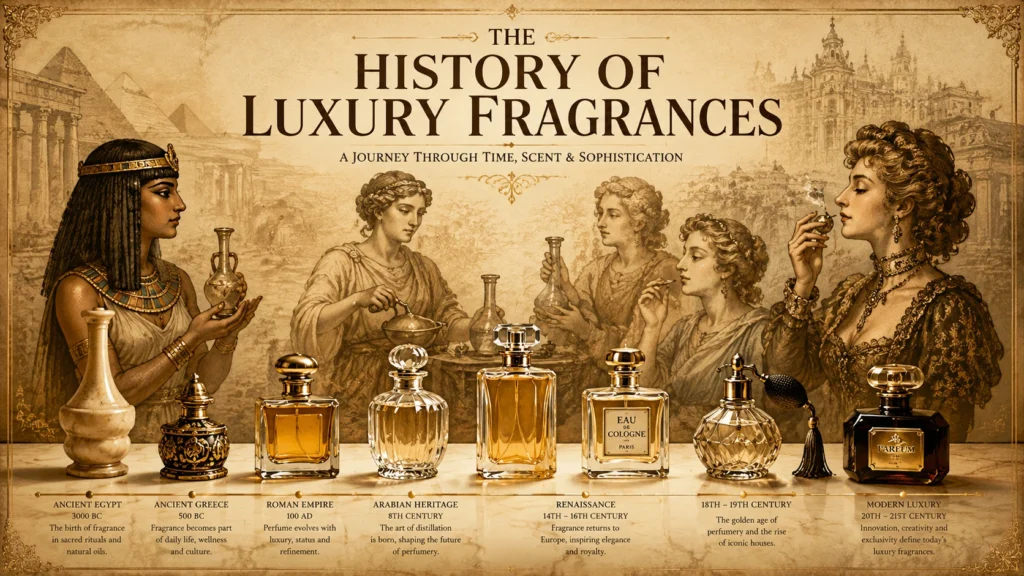
Luxury Perfumery has evolved over thousands of years, blending ancient traditions with modern innovation.
Ancient Perfume Origins
The earliest perfumes date back to ancient Egypt, Mesopotamia, and India. Religious ceremonies, royal courts, and sacred rituals often featured aromatic oils and incense.
Egyptians treasured fragrances as symbols of status and spirituality. Rare oils and botanical extracts were highly prized possessions among nobles and rulers.
French Perfumery Revolution
France emerged as the global center of luxury perfumery during the Renaissance and later flourished in the 17th and 18th centuries.
The city of Grasse became renowned for cultivating flowers such as jasmine, rose, and lavender. Its influence remains central to luxury fragrance production today.
Modern Luxury Fragrance Industry
Today’s luxury fragrance industry combines traditional craftsmanship with advanced chemistry, sustainable sourcing, and artistic creativity. Modern perfumers create sophisticated compositions capable of telling stories and evoking emotions through scent.
What Makes a Fragrance Truly Luxury?
Not every expensive perfume qualifies as a luxury fragrance. Several factors distinguish premium perfumes from mass-market alternatives.
Rare Ingredients
Luxury fragrances often incorporate costly materials such as:
- Oud
- Orris root
- Rose absolute
- Ambergris accords
- Natural sandalwood
- Jasmine sambac
These ingredients contribute depth, complexity, and uniqueness.
Master Perfumers
Luxury perfumes are frequently developed by highly trained perfumers who spend years perfecting formulations.
Craftsmanship
Premium fragrances undergo extensive testing, refinement, and quality control before reaching consumers.
Exclusivity
Many luxury fragrances are produced in smaller quantities, increasing their desirability and uniqueness.
Brand Heritage
Prestigious fragrance houses often possess decades—or even centuries—of perfume-making expertise.
The Science Behind Luxury Perfumes
Behind every memorable fragrance lies a fascinating blend of chemistry and artistry.
Understanding Fragrance Notes
Perfumes consist of three primary note categories:
| Note Type | Duration | Purpose |
| Top Notes | 5–30 minutes | First impression |
| Heart Notes | 2–6 hours | Core fragrance character |
| Base Notes | 6–24+ hours | Long-lasting foundation |
The Fragrance Pyramid
The fragrance pyramid explains how a scent unfolds over time.
Top notes appear immediately after application, heart notes emerge once top notes fade, and base notes provide lasting depth.
How Perfume Evolves on Skin
Body chemistry, skin type, temperature, and humidity all influence how fragrances develop.
Understanding Sillage and Projection
Sillage refers to the scent trail left behind.
Projection measures how far a fragrance radiates from the wearer.
Luxury fragrances often balance both characteristics beautifully.
Understanding Fragrance Concentrations
Concentration significantly impacts longevity and intensity.
Eau Fraiche
- 1–3% fragrance oil
- Lasts 1–2 hours
Cologne
- 2–5% fragrance oil
- Lasts 2–4 hours
Eau de Toilette
- 5–15% fragrance oil
- Lasts 4–8 hours
De Parfum
- 15–20% fragrance oil
- Lasts 6–12 hours
Parfum
- 20–30% fragrance oil
- Lasts 12–24 hours
Extrait de Parfum
- 30–40% fragrance oil
- Highest concentration level
- Exceptional longevity
Luxury Fragrance Families Explained
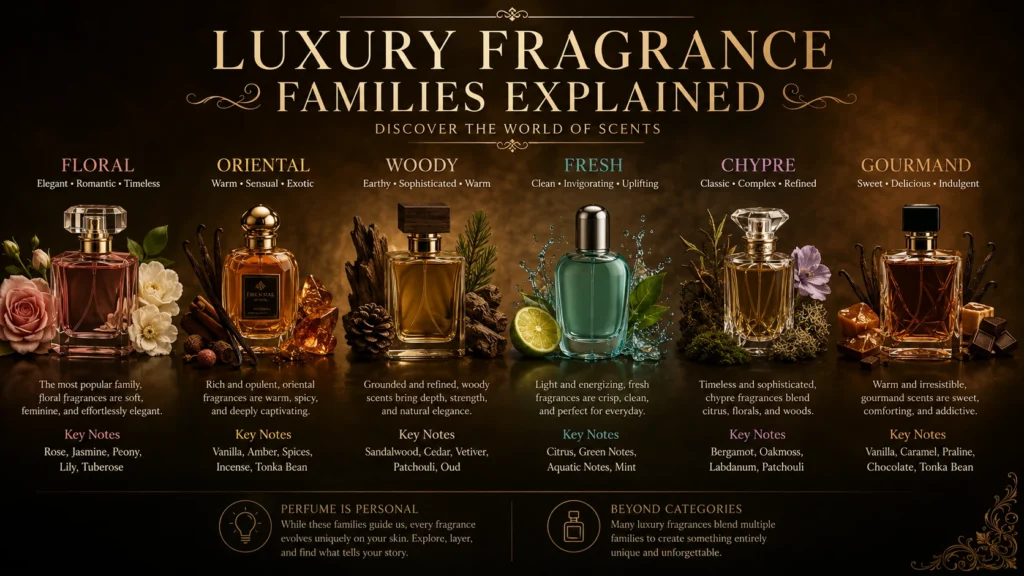
Understanding fragrance families helps simplify perfume selection.
Floral
Romantic, elegant, and timeless.
Popular notes:
- Rose
- Peony
- Jasmine
- Lily
Woody
Warm and sophisticated.
Popular notes:
- Cedarwood
- Sandalwood
- Vetiver
Amber
Rich, sensual, and luxurious.
Oriental
Spicy, exotic, and dramatic.
Fresh
Clean and invigorating.
Citrus
Bright and energetic.
Aquatic
Inspired by oceans and water elements.
Gourmand
Sweet edible-inspired scents.
Popular notes:
- Vanilla
- Caramel
- Chocolate
Chypre
Elegant blends featuring oakmoss and citrus.
Fougère
Classic masculine compositions built around lavender and woods.
The World’s Most Valuable Perfume Ingredients
Certain fragrance materials command extraordinary prices due to rarity and complexity.
Oud
Often called “liquid gold,” oud comes from resin-infused agarwood trees.
Ambergris
Historically among the most valuable fragrance ingredients ever used.
Orris Root
Derived from iris rhizomes and aged for years before use.
Sandalwood
Highly prized for its creamy, smooth woodiness.
Rose Absolute
Thousands of rose petals are required to produce small amounts.
Jasmine Sambac
A luxurious floral ingredient harvested with great care.
Designer vs Niche vs Artisan Perfumes
Designer Fragrances
Created by fashion and luxury brands.
Advantages:
- Broad appeal
- Wide availability
- Strong brand recognition
Niche Fragrances
Produced by fragrance-focused houses prioritizing creativity.
Advantages:
- Greater uniqueness
- Artistic compositions
- Higher ingredient quality
Artisan Fragrances
Handcrafted by independent perfumers.
Advantages:
- Individual creativity
- Limited production
- Distinctive identity
Which Is Best?
The answer depends on personal preferences. Many fragrance enthusiasts enjoy owning all three categories.
Best Luxury Fragrance Brands
Several fragrance houses consistently define luxury perfumery.
Chanel
Known for timeless elegance and iconic compositions.
Dior
Combines heritage with modern innovation.
Tom Ford
Famous for bold and sophisticated creations.
Creed
Renowned for luxury craftsmanship and signature blends.
Maison Francis Kurkdjian
Celebrated for artistic excellence.
Amouage
Produces opulent fragrances inspired by Middle Eastern perfumery.
Byredo
Known for contemporary creativity and minimalist sophistication.
How Luxury Fragrances Are Created
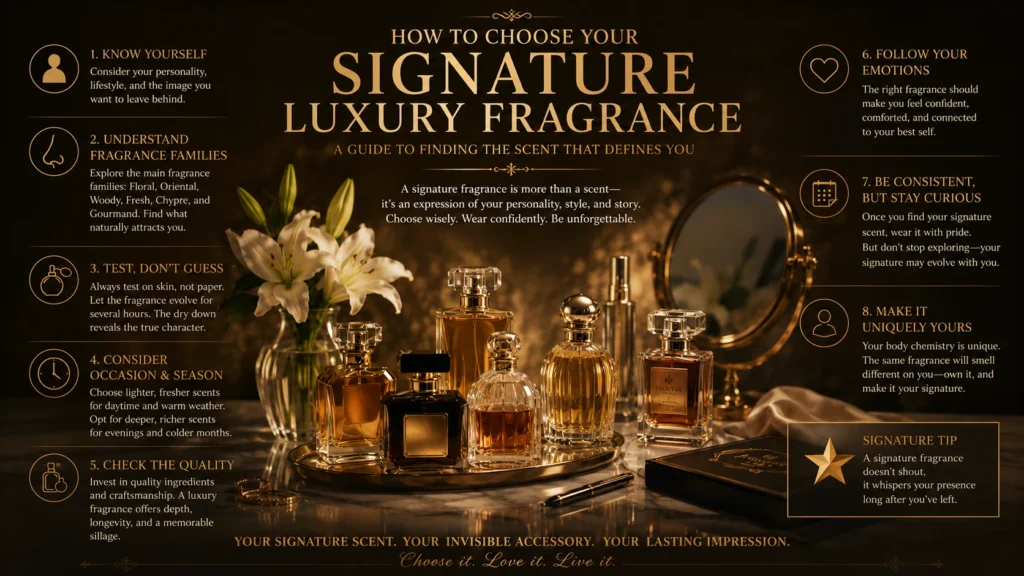
Creating a Luxury Fragrance involves multiple specialized stages.
Ingredient Sourcing
Premium raw materials are sourced globally.
Formula Development
Perfumers experiment extensively to achieve balance and harmony.
Maceration Process
Fragrances mature over time, allowing ingredients to blend seamlessly.
Bottling and Quality Control
Every batch undergoes rigorous testing before release.
How to Choose Your Signature Luxury Fragrance
A signature scent should feel personal and authentic.
Personality-Based Selection
Consider whether your style is:
- Elegant
- Bold
- Romantic
- Adventurous
- Minimalist
Occasion-Based Selection
Different settings may call for different fragrances.
Climate Considerations
Warm climates favor lighter scents.
Cool climates often complement richer compositions.
Seasonal Recommendations
Spring: Floral and fresh
Summer: Citrus and aquatic
Autumn: Woody and spicy
Winter: Amber and gourmand
Building a Luxury Fragrance Wardrobe
A fragrance wardrobe provides versatility for different situations.
Daily Fragrance
Fresh and easy to wear.
Office Fragrance
Professional and subtle.
Date Night Fragrance
Warm, inviting, and memorable.
Formal Event Fragrance
Sophisticated and refined.
Vacation Fragrance
Light, uplifting, and carefree.
Fragrance Layering Masterclass
What Is Layering?
Layering combines multiple scents to create a personalized fragrance profile.
Best Layering Combinations
- Vanilla + Sandalwood
- Rose + Oud
- Citrus + Vetiver
- Jasmine + Musk
Common Layering Mistakes
- Using too many fragrances
- Combining conflicting scent profiles
- Over-applying products
How to Make Perfume Last Longer
Application Techniques
Apply to pulse points:
- Neck
- Wrists
- Behind ears
- Inner elbows
Skin Preparation
Moisturized skin retains fragrance more effectively.
Clothing vs Skin
Both methods offer benefits, though testing for fabric compatibility is recommended.
Storage Best Practices
Store fragrances:
- Away from sunlight
- Away from heat
- In stable temperatures
- Inside original packaging when possible
Luxury Fragrance Trends for 2026
Sustainable Perfumery
Consumers increasingly prioritize ethical sourcing and sustainability.
Refillable Bottles
Luxury brands continue expanding refill programs.
AI-Assisted Perfume Creation
Technology is helping perfumers explore new scent possibilities.
Personalized Fragrances
Customization continues to grow within the premium market.
Common Mistakes Luxury Fragrance Buyers Make
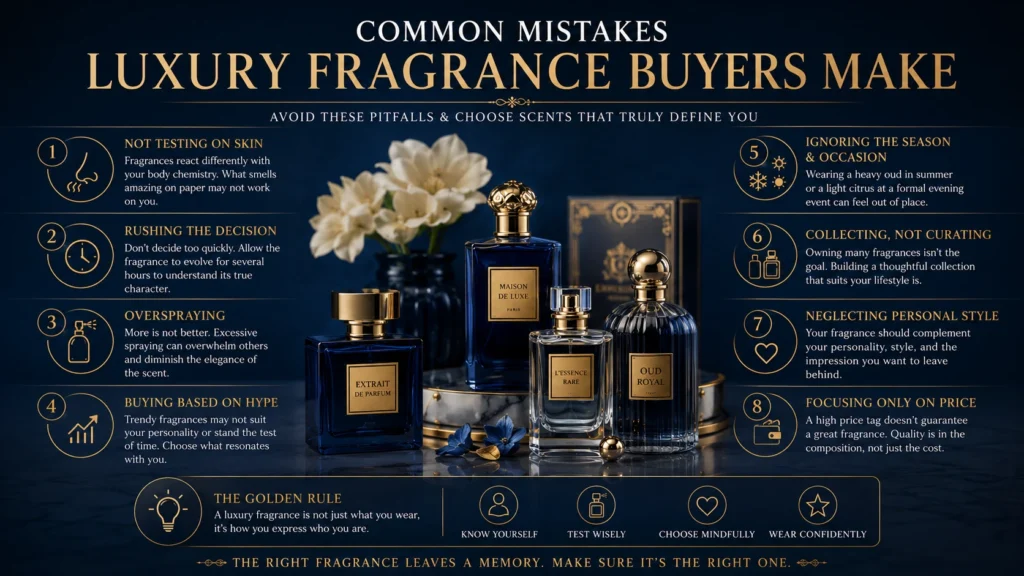
Blind Buying
Always sample when possible.
Over-Spraying
More fragrance does not necessarily create a better impression.
Improper Storage
Heat and sunlight can degrade fragrance quality.
Ignoring Skin Chemistry
A fragrance may smell different on each person.
People Also Ask
A; Luxury fragrances typically feature superior ingredients, expert craftsmanship, sophisticated compositions, and strong brand heritage.
A; Depending on concentration and formulation, luxury perfumes may last anywhere from four hours to over twenty-four hours.
A; Not necessarily. Both categories offer unique advantages and appeal to different preferences.
A; Extrait de Parfum generally contains the highest concentration of fragrance oils.
Conclusion
Luxury Fragrances represent one of the most personal forms of self-expression. They combine artistry, science, history, emotion, and craftsmanship into an experience that extends far beyond scent alone. Whether you are exploring designer classics, niche masterpieces, or artisan creations, understanding the foundations of perfumery helps you make more informed choices and enjoy fragrances more deeply.
The perfect luxury fragrance is not necessarily the most expensive or exclusive—it is the one that resonates with your personality, complements your lifestyle, and makes you feel confident every time you wear it. As you continue your fragrance journey, take time to explore different scent families, experiment with layering, and build a collection that reflects your unique identity.