Introduction
Have you received a message containing just three letters: “WTV”? If you’re unsure what the sender means, understanding this popular texting abbreviation can make online conversations much easier.
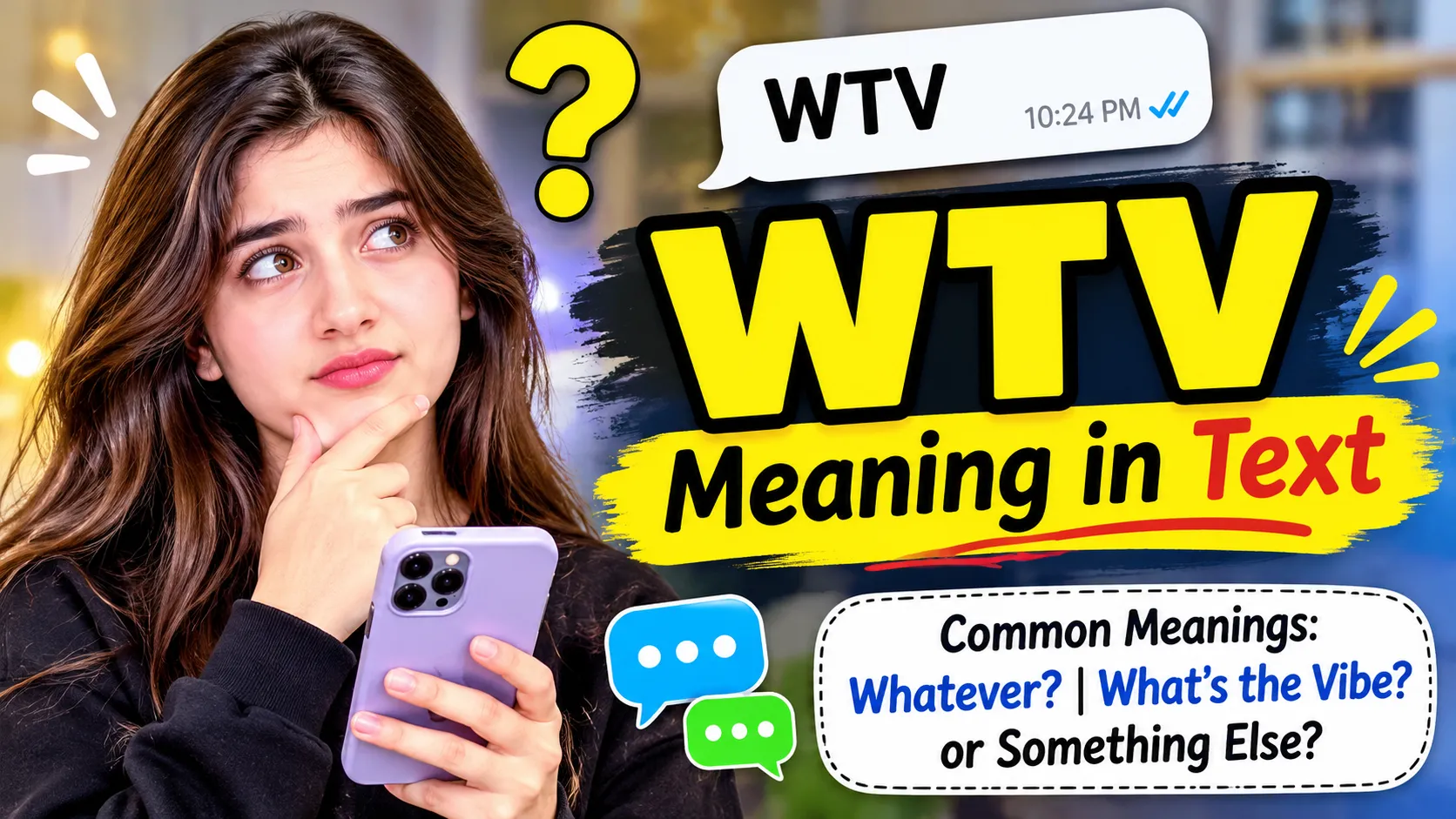
WTV means “Whatever” in text messages, chats, and social media conversations. People use it to express that they don’t mind, have no particular preference, or don’t want to continue discussing something. Depending on the situation, it can sound relaxed, indifferent, playful, or dismissive.
For example:
Friend: Should we watch a comedy or an action movie?
You: WTV, you choose!
Here, WTV means that either option is fine.
However, if someone sends “WTV” during an argument, it may suggest frustration or that they no longer want to discuss the issue.
In this guide, you’ll learn what WTV stands for, its different meanings, how people use it on Snapchat, Instagram, TikTok, and WhatsApp, whether it’s rude, and how to respond naturally.
What Does WTV Mean in Text?
WTV means “Whatever” in texting and online conversations. It is an informal abbreviation people use instead of typing the complete word.
The expression can communicate different attitudes depending on the surrounding conversation.
Here are its three most common interpretations:
- No preference: The sender is comfortable with any available option.
- Indifference: The sender doesn’t have a strong opinion about something.
- Dismissiveness: The sender wants to end a discussion or avoid further arguments.
For example:
- “WTV, you pick the restaurant.” – Any choice is fine.
- “WTV, I don’t mind.” – The sender has no preference.
- “WTV, I’m done arguing.” – The sender sounds frustrated.
The important thing to remember is that WTV doesn’t automatically mean someone is angry. Its emotional meaning depends on the conversation.
WTV Meaning at a Glance
Here’s a quick overview of the abbreviation:
| Element | Meaning |
| Abbreviation | WTV |
| Full form | Whatever |
| Category | Internet slang |
| Type | Texting abbreviation / initialism |
| Main purpose | Expressing indifference or flexibility |
| Common tone | Casual, neutral, or dismissive |
| Common platforms | Snapchat, Instagram, TikTok, WhatsApp |
| Formal or informal? | Informal |
| Alternative spelling | wtv, Wtv |
Quick example: “WTV works for me” means “Whatever works for me.”
What Does WTV Stand For?
WTV stands for Whatever. It is a shortened written expression commonly used in digital communication.
People use it because typing three letters is quicker than writing the entire word.
WTV is also an example of an initialism because its letters are read individually rather than pronounced as one word.
Consider these examples:
- “WTV you want is fine.” – Whatever you want is fine.
- “I’ll wear WTV I like.” – I’ll wear whatever I like.
- “WTV happens, happens.” – Whatever happens, happens.
In ordinary texting, you should generally understand WTV as “Whatever.”
Different Meanings of WTV in Text Messages
Although WTV has one dominant meaning, the expression can communicate several different feelings.
Understanding these interpretations helps prevent unnecessary misunderstandings.
1. WTV Means Whatever You Want
Sometimes people use WTV to give someone else the freedom to make a decision.
Example:
Person A: Which restaurant should we visit?
Person B: WTV you want.
Meaning: The sender is comfortable with whatever restaurant the other person chooses.
2. WTV Means I Don’t Mind
WTV can communicate that someone is happy with different choices.
Example:
Friend: Should we meet at 5 or 6?
You: WTV works for me.
Meaning: Either time is acceptable.
3. WTV Means I Don’t Care
In some conversations, WTV communicates indifference.
Example:
Person A: Do you want to join the competition?
Person B: WTV, it doesn’t matter.
Meaning: The sender isn’t particularly concerned about the decision.
4. WTV Means Frustration
When someone sends WTV during a disagreement, it may sound annoyed or dismissive.
Example:
Person A: You never listen to my advice.
Person B: WTV.
Meaning: The sender may be frustrated and unwilling to continue the discussion.
5. WTV Means Let’s Move On
People sometimes use WTV to end an unproductive conversation.
Example:
Friend: We’re never going to agree about this.
You: WTV, let’s talk about something else.
Meaning: The sender wants to move on from the topic.
How Is WTV Used in Everyday Conversations?
WTV appears in informal digital communication, particularly when people want to respond quickly.
Here are some common situations:
- Making plans: When someone doesn’t mind where you go.
- Choosing activities: When another person can decide what to do.
- Casual conversations: When you don’t have a strong opinion.
- Arguments: When someone wants to stop discussing an issue.
- Social media discussions: When someone wants to express an unbothered attitude.
For example:
Friend: Do you prefer pizza or burgers?
You: WTV, both sound good.
In this situation, WTV communicates flexibility rather than frustration.
WTV Meaning on Snapchat
On Snapchat, WTV usually means “Whatever.” People use it in private chats, quick replies, and casual conversations with friends.
Snapchat users may write WTV when discussing plans, responding to suggestions, or showing that they aren’t particularly concerned about a decision.
Snapchat examples:
- “WTV, send me the snap.”
- “WTV you wanna do today?”
- “WTV lol, it’s fine.”
- “WTV, I’ll see you tomorrow.”
For example:
Friend: Should I send you the picture now or later?
You: WTV, whenever you’re free.
Here, WTV communicates that either option is acceptable.
The meaning isn’t exclusive to Snapchat. It generally remains the same across other messaging platforms.
WTV Meaning on Instagram
On Instagram, WTV is commonly used in direct messages, story replies, captions, and comments.
People may use it when discussing plans, responding to opinions, or expressing that they aren’t bothered by something.
Instagram examples:
- “WTV, I’m posting this picture anyway.”
- “Do WTV make you happy?”
- “WTV, your choice.”
- “WTV people think about me.”
For example:
Friend: People might criticize your new picture.
You: WTV, I like it.
Here, the sender is expressing an unbothered attitude.
WTV doesn’t have a special Instagram-only definition. Its usual meaning is still “Whatever.”
WTV Meaning on TikTok
On TikTok, WTV can appear in video comments, captions, replies, and Private Messages.
People often use it to express independence, indifference, or a casual attitude toward other people’s opinions.
TikTok examples:
- “WTV people say, keep going.”
- “Doing WTV makes me happy.”
- “WTV, I’m still enjoying this trend.”
- “WTV happens, happens.”
For example:
Comment: What if people don’t like your videos?
Reply: WTV, I’m having fun.
In this context, the abbreviation communicates that the creator isn’t concerned about negative opinions.
The exact tone still depends on the sentence and the surrounding discussion.
WTV Meaning on WhatsApp
On WhatsApp, WTV is generally used in private messages and group chats.
Friends and family members may use it when discussing plans, choosing activities, or responding to suggestions.
WhatsApp examples:
- “WTV, you can decide.”
- “WTV time works for me.”
- “WTV bro, no problem.”
- “WTV happens, happens.”
Consider this conversation:
Friend: Should I pick you up at 4 PM?
You: WTV, whatever works for you.
Here, the sender is giving the other person flexibility.
In a tense conversation, however, the same abbreviation might communicate frustration rather than agreement.
WTV Meaning on Discord, Facebook, and X
WTV isn’t limited to private messaging applications. You may also encounter it in public discussions and online communities.
Discord: Members may use WTV in casual server conversations when responding to suggestions or discussing gaming plans.
Example: “WTV game you want to play.”
Facebook: People may use it in comments, Messenger chats, and group discussions.
Example: “WTV makes you happy, just do it.”
X (Twitter): Users may include WTV in short posts or replies when expressing indifference or an unbothered attitude.
Example: “WTV people think, I’m doing my thing.”
Across these platforms, the usual meaning remains “Whatever.”
What Does WTV Mean From a Girl?
When a girl sends WTV in a text message, it generally means “Whatever.” However, the tone depends on your conversation and relationship.
She might be expressing:
- Flexibility: She doesn’t mind which option you choose.
- Indifference: She doesn’t have a strong opinion.
- Annoyance: She may be frustrated with the discussion.
- Playfulness: She might simply be using casual texting language.
Example 1:
You: Which restaurant would you like to visit?
Her: WTV, you choose.
Meaning: She’s happy to let you decide.
Example 2:
You: Are you still upset with me?
Her: WTV.
Meaning: She may be annoyed or unwilling to discuss the issue.
Example 3:
You: Should I bring anything?
Her: WTV lol.
Meaning: She may be responding casually without requesting anything specific.
Don’t automatically assume she is angry because she uses WTV. Look at the complete conversation before interpreting her feelings.
What Does WTV Mean From a Guy?
When a guy sends WTV, it generally has the same meaning: “Whatever.”
He may be communicating that he doesn’t mind, has no particular preference, or wants to move on from a discussion.
Common interpretations include:
- He’s comfortable with your decision.
- He doesn’t want to choose between options.
- He’s not particularly concerned about something.
- He may be frustrated with the conversation.
- He’s responding casually.
Examples:
Example 1:
You: Should we play football or cricket?
Him: WTV bro, your choice.
Meaning: Either activity is fine.
Example 2:
You: Why didn’t you call me yesterday?
Him: WTV.
Meaning: He may be avoiding the discussion or expressing frustration.
Example 3:
You: Are you coming tonight?
Him: WTV, maybe.
Meaning: He isn’t giving a definite answer.
WTV doesn’t have a different standard definition depending on whether a guy or girl sends it.
Is WTV Rude or Disrespectful?
WTV is not automatically rude. It can be a completely normal way to say that you don’t mind or are comfortable with someone else’s decision.
However, it can sound dismissive when used during an argument or when someone wants to stop communicating.
| Message | Possible tone |
| “WTV, you choose.” | Friendly and flexible |
| “WTV lol.” | Casual or playful |
| “WTV, I don’t mind.” | Neutral |
| “WTV.” during an argument | Potentially dismissive |
| “WTV, leave me alone.” | Clearly dismissive |
How Can You Tell If Someone Is Being Rude?
Consider these factors before interpreting the message:
- Previous messages: Was there an argument before WTV was sent?
- Punctuation: Does the person use a short, standalone reply?
- Emojis: Does the message contain friendly or sarcastic emojis?
- Relationship: Is this how the sender normally communicates?
- Follow-up: Does the person continue the conversation or suddenly stop responding?
A single abbreviation cannot reliably reveal someone’s emotional state.
How to Respond When Someone Says WTV
The best response depends on what the other person is trying to communicate.
If they’re being friendly, keep your reply casual. If they sound annoyed, try to understand what’s bothering them instead of starting another argument.
Here are some natural responses:
| Situation | Possible reply |
| They don’t mind | “Okay, I’ll decide!” |
| They give you a choice | “Let’s go with pizza.” |
| They sound relaxed | “Haha, sounds good.” |
| They seem annoyed | “Is something bothering you?” |
| They want to move on | “No problem, let’s change the topic.” |
| They agree with anything | “Perfect, that’s easy!” |
| They sound dismissive | “Okay, we can talk later.” |
Casual Replies to WTV
- “Alright, sounds good.”
- “Cool, your choice next time.”
- “Haha, okay!”
- “No worries.”
- “Let’s do that.”
- “Fair enough.”
- “Whatever works for you.”
Friendly Replies to WTV
- “I’ll pick something fun!”
- “Great, let’s do that.”
- “Perfect, we’re on the same page.”
- “Okay, surprise me next time!”
- “Sounds like a plan.”
Replies When Someone Seems Upset
- “Are you okay?”
- “Did something bother you?”
- “I don’t want us to misunderstand each other.”
- “We can talk about it whenever you’re ready.”
- “Let’s discuss this calmly.”
A polite response can prevent a small misunderstanding from becoming a bigger disagreement.
WTV Texting Examples in Real Conversations
Here are 12 practical examples showing how WTV can appear in everyday messages.
1. Choosing a restaurant
Person A: Where should we eat?
Person B: WTV, you decide.
Meaning: Any restaurant is fine.
2. Choosing a movie
Person A: Comedy or action?
Person B: WTV, both are good.
Meaning: The sender has no preference.
3. Making weekend plans
Person A: What do you want to do this weekend?
Person B: WTV you want.
Meaning: The other person can choose the activity.
4. Discussing clothes
Person A: Should I wear the black shirt?
Person B: WTV looks good on you.
Meaning: The sender isn’t particular about the choice.
5. Talking about a disagreement
Person A: You never understand my point.
Person B: WTV.
Meaning: The sender may not want to continue arguing.
6. Planning a meeting
Person A: Is 5 PM okay?
Person B: WTV works for me.
Meaning: The suggested time is acceptable.
7. Talking about social media
Person A: People are criticizing my new post.
Person B: WTV, just be yourself.
Meaning: Don’t worry too much about other people’s opinions.
8. Casual conversation
Person A: Do you want tea or coffee?
Person B: WTV lol.
Meaning: Either option is fine.
9. Making travel plans
Person A: Should we go by bus or train?
Person B: WTV is easier for you.
Meaning: The other person can choose the convenient option.
10. Discussing a problem
Person A: Are you still upset about yesterday?
Person B: WTV, forget it.
Meaning: The sender may want to leave the issue behind.
11. Choosing a game
Person A: FIFA or PUBG?
Person B: WTV, bro.
Meaning: Either game is fine.
12. Ending a conversation
Person A: I still think you should apologize.
Person B: WTV, I’m done talking.
Meaning: The sender is ending the discussion.
WTV vs. IDC, IDK, NVM, TBH, and Other Texting Abbreviations
And WTV is related to several popular texting abbreviations, but they don’t all communicate the same thing.
| Slang | Full form | Common meaning |
| WTV | Whatever | Indifference or flexibility |
| IDC | I Don’t Care | Lack of concern |
| IDK | I Don’t Know | Uncertainty |
| NVM | Never Mind | Disregarding a previous statement |
| TBH | To Be Honest | Introducing an honest opinion |
| IMO | In My Opinion | Sharing a personal viewpoint |
| FR | For Real | Agreement or emphasis |
| WYD | What are you doing? | Asking what someone is doing |
| W/E | Whatever | Alternative abbreviation |
WTV vs. IDC
Means “Whatever,” while IDC means “I Don’t Care.”
WTV can sound flexible or dismissive depending on the situation. IDC is generally a more direct expression of not caring.
Examples:
- “WTV, you choose.” – Any choice is fine.
- “IDC which movie we watch.” – The sender doesn’t care which movie is selected.
WTV vs. IDK
WTV means “Whatever,” whereas IDK means “I Don’t Know.”
Examples:
- “WTV, you choose.” – Any choice is acceptable.
- “IDK what to choose.” – The sender doesn’t know which option to select.
WTV vs. NVM
WTV communicates indifference or flexibility.
NVM means “Never Mind” and is often used when someone wants another person to disregard a previous statement or request.
Example:
- “WTV, choose whatever you like.”
- “NVM, I found the answer.”
WTV vs. W/E
Both abbreviations can represent “Whatever.”
WTV uses three letters, while W/E uses a shortened written form with a slash. The intended meaning is generally similar.
Understanding these differences helps you choose the right expression when messaging someone.
Can WTV Have Other Meanings?
Although “Whatever” is the dominant meaning in ordinary texting, WTV can have alternative interpretations in specific situations.
For example:
- What’s the vibe? – A less common interpretation that may appear in particular online communities.
- What’s the verdict? – A possible context-specific abbreviation.
- Watch the video – An interpretation that may be used in a specific conversation.
These meanings are not interchangeable with the usual texting definition.
For example:
Person A: What are we doing tonight?
Person B: WTV.
Here, “Whatever” is the most natural interpretation.
But if someone writes:
Person A: WTV on this new song?
They might be using the letters to ask for an opinion, depending on their personal shorthand.
Outside messaging, WTV can also refer to unrelated technical or organizational names. The context in which you encounter it matters.
- Related To Another Article: https://blessnesty.com/smo-meaning-in-text/
Common Misunderstandings About WTV
People sometimes misunderstand WTV because the abbreviation is short and doesn’t communicate tone clearly.
Here are a few common misconceptions:
Misunderstanding 1: WTV always means I don’t care.
Correction: It can also mean that someone has no preference or is comfortable with either option.
Misunderstanding 2: WTV is always rude.
Correction: It can be friendly, neutral, playful, or dismissive.
Misunderstanding 3: WTV has different definitions for boys and girls.
Correction: The standard texting meaning doesn’t change based on gender.
Misunderstanding 4: WTV is exclusive to Snapchat.
Correction: It is used across several messaging and social media platforms.
Misunderstanding 5: Capitalization changes its meaning.
Correction: WTV, wtv, and Wtv generally communicate the same thing.
Understanding these points makes it easier to interpret messages accurately.
Is WTV an Acronym or an Abbreviation?
WTV is generally described as an abbreviation or initialism for “Whatever.”
An initialism is formed from the first letters of a phrase or expression, with each letter pronounced separately.
An acronym, by contrast, is generally pronounced as a word, such as NASA.
In everyday digital communication, WTV is mainly a written texting shortcut rather than a word people pronounce aloud.
Is WTV Still Popular in 2026?
WTV remains a recognizable abbreviation in online conversations and informal texting.
You may encounter it in:
- Snapchat messages.
- Instagram direct messages.
- TikTok comments.
- WhatsApp group chats.
- Discord communities.
- SMS and iMessage conversations.
- Online discussions and social media posts.
Its use can vary between communities, age groups, and individual communication styles.
Some people prefer writing the complete word “whatever,” while others use WTV to keep messages short.
The important thing is to understand its meaning rather than assume every person uses it in exactly the same way.
Can You Use WTV in Professional Conversations?
WTV is best reserved for informal conversations with friends, relatives, and people who understand texting slang.
It is generally better to avoid it in:
- Professional emails.
- Workplace discussions.
- Academic assignments.
- Formal business messages.
- Customer service communication.
Instead of writing WTV, consider using clearer alternatives.
| Informal message | Professional alternative |
| WTV you choose | Either option works for me |
| WTV is fine | I’m comfortable with either choice |
| WTV, I don’t care | I have no particular preference |
| WTV happens | Whatever happens, we’ll address it |
Using complete phrases makes your communication clearer and more professional.
People Also Ask
WTV means “Whatever.” It is a casual abbreviation used to express indifference, flexibility, or a lack of preference in text messages.
WTV stands for “Whatever.” People use it as a shorter alternative when communicating through texts, chats, and social media.
Sometimes. WTV can communicate “I don’t care,” but it can also mean “I don’t mind” or “you decide.” The context determines its intended meaning.
On Snapchat, WTV usually means “Whatever.” Friends use it in chats and quick replies to express flexibility, indifference, or mild annoyance.
When a girl sends WTV, it generally means “Whatever.” Depending on the conversation, she may be relaxed, indifferent, playful, or annoyed.
Conclusion
WTV means “Whatever” in text messages, social media conversations, and online chats.
People commonly use it when they don’t have a particular preference, want someone else to make a decision, or don’t want to continue discussing a topic.
Its tone can be friendly, casual, indifferent, or dismissive depending on the situation. You may encounter WTV on Snapchat, Instagram, TikTok, WhatsApp, Discord, and other messaging platforms.
The easiest way to understand it is to look at the surrounding conversation rather than focusing on the abbreviation alone. Once you understand its context, you’ll know when someone is simply being flexible and when they might be expressing frustration.
Remember: WTV usually means “Whatever,” but the conversation determines what the sender is really trying to Communicate.